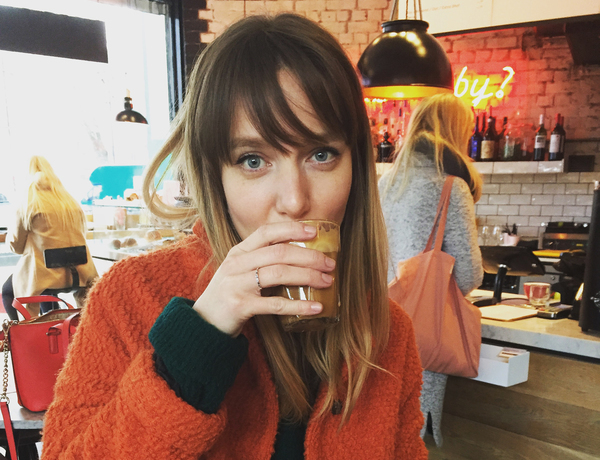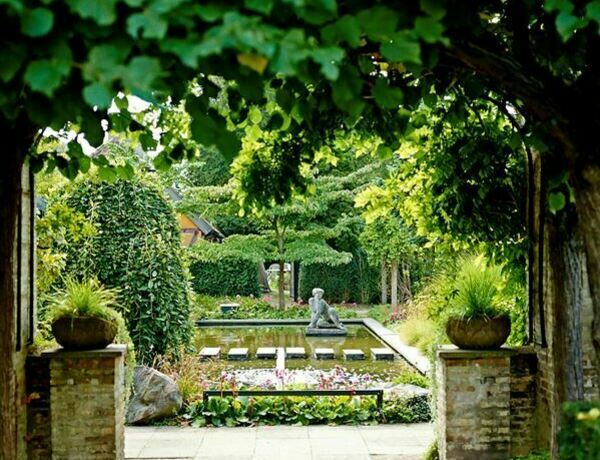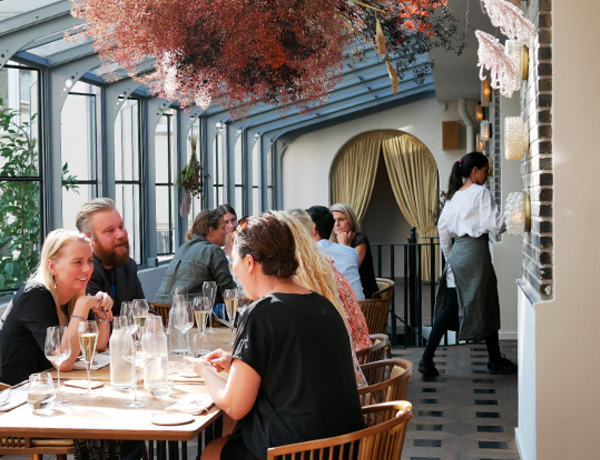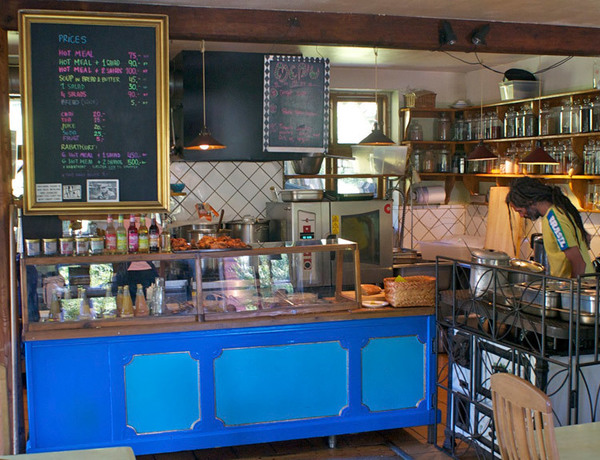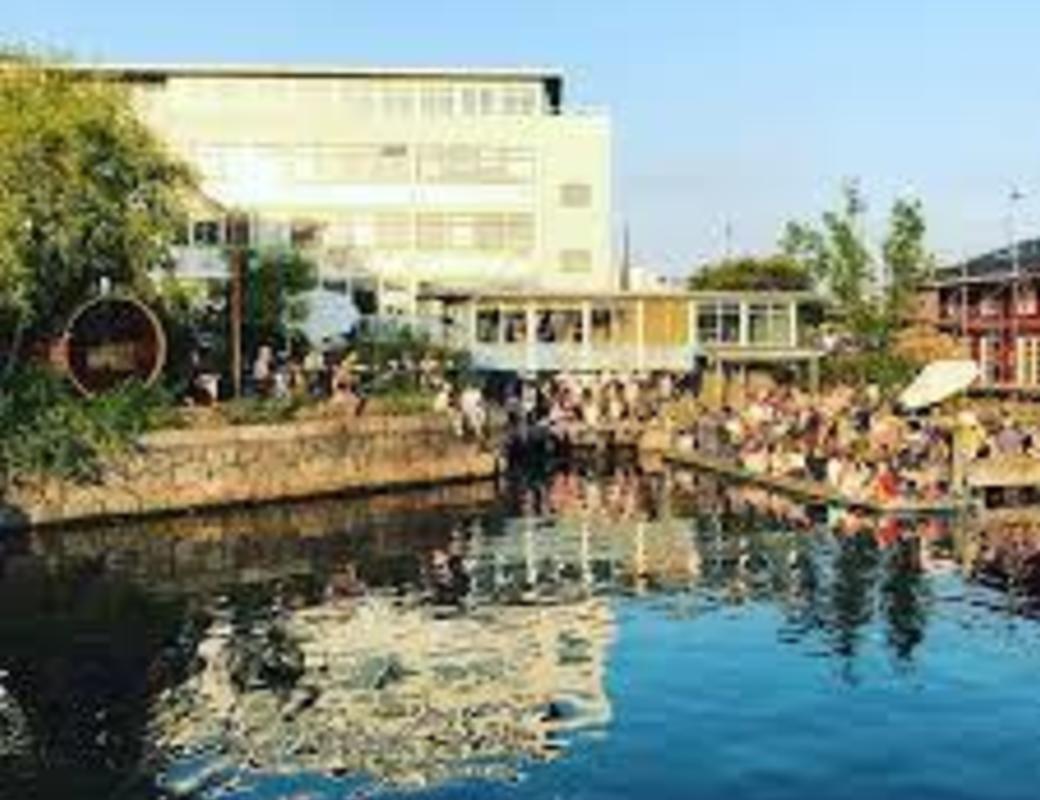
My favourite place to hang out in this city (and a hidden gem)! The simple café and restaurant in Copenhagen’s rustic Refshaleøen is all about ‘hygge’. La Banchina boasts one of the city’s best spots for sunbathing and jumping in the water from early spring to late autumn. And during winter, the wood-fired sauna gets you all set after a cold dip in the harbour.
Website
labanchina.dk
Address
La Banchina, 141 Refshalevej, Copenhagen, Denmark
Current city: London
Other cities: TrondheimCopenhagen
Johanne Lian Olsen is a Graphic Designer working within type design, editorial design and illustration. She is flexing between working at projects in the UK and Norway.
 

More Places in Copenhagen 69

An area in Copenhagen that has gotten quite a lot of attention because of its experimental public space and planning is Superkilen, a park in the north west of the city centre. Designed in a collaboration between the arts group Supeflex, Bjarke Ingels Group (BIG) and Topotek1, this park feature an eclectic mix of features, such as a fountain from Morocco, sculptures from Japan and large scale Russian signs. The area this park is located in, Nørrebro, is quite diverse, and the designers set out to reflect this by treating the park as ‘a world exhibition filled with interesting things’, and to represent the nationalities of every local resident. The park is divided into three areas: The Red Square, The Black Market and the Green Park. The Red Square is decorated with red-toned geometric patterns, contains cafés and feels modern and urban. The Black Markets’ ground are painted with white lines that creates almost aerodynamic patterns that curve around the benches and fountain. The Green park is a park for walking the dog, picnics and sports. Bring your camera as this area offers some great photo opportunities!
Read More
When in need of some inspiration The Design Museum is an obvious choice living in Copenhagen. What is not that well known to the visitors is that the Design Museum has a great poster collection not open to the general public. If you plan your visit and make an agreement with the Museum beforehand, you will be able to visit the collection archived in the attic above the Museums’ library (which is also a must-see, but expect to be ‘shushed’). The Design Museum has since its founding in the 1890s collected posters, and the collection documents commercial, cultural, and political developments in poster history both in Denmark and around the world, from the boom in posters in the 1800s to today. And all of the stars of poster history are represented. The curator of the department will be able to find posters relevant to the subject you are interested in, and is very knowledgeable of both printing techniques and cultural history.
Read More
If you like beautiful architecture and want to escape the city for a few hours, head north of the city along the coast. Bellevue beach is one of the most popular beaches in the Copenhagen area, on the northern outskirts of the city. The Beach is a sandy beach, approx. 700m long, and feature characteristic blue-striped lifeguard towers and a geometric kiosk, all designed by the Danish architect and furniture designer Arne Jacobsen in the 1930s. The beach is used by everybody – from young families to nudists, they all share the same space (this is Denmark after all).  If you take the coastal road up to the beach you will pass the Skovshoved Petrol Station designed by the same man. The functionalist style Petrol Station built in the early 1930s is still in operation. Whilst the pumps still functions as a petrol station, the building now functions as a cafe. The roof of the station is oval-shaped, hence the nickname ‘The Mushroom’, and is illuminated at night to highlight the beautiful designed building.
Read More
As the name implies, the Paper Island was home to a large paper warehouse for the newspaper production. Today, the island has been transformed into modern buildings, designed by the Danish architectural firm Cobe and the spectacular water culture house and harbor bath are designed by the Japanese architect Kengo Kuma  Photo: © Ture Andersen
Read More
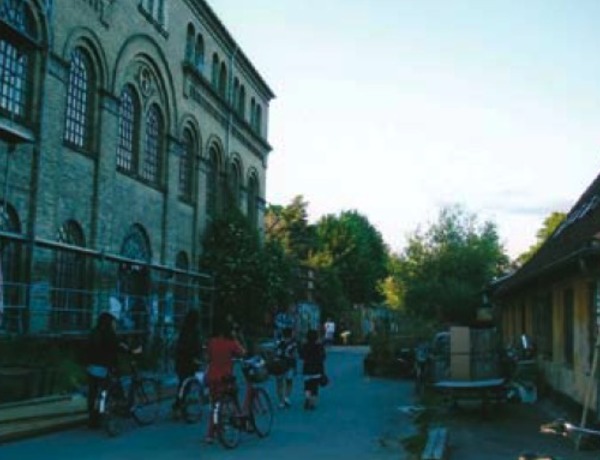
Christiania attracts a lot of tourists because of its free-spirit culture and open sale of drug, but if you venture further into the area you will find some great experimental architecture, mainly developed under the idea of ‘architecture without architects’. Ordinary building restrictions did not seem to be a consideration in Christiania, and in the area you find futuristic spaceships, sustainable buildings, buildings made out of what material was available during the process, or buildings made from architecture students volunteering to try our new ideas. Now the government try to control the development with impending rules and regulations - such as the new law that nothing new can be built except roofing. The inhabitants solution is to make houses entirely out of roofing…  In the area around Christiania you find some beautiful house boats for inspiration, some small and some matching the size of an ordinary house. Here you can see converted ferries, a three storey boathouse and some that looks like shipping containers. I love exploring this whole area, as it feels like I find new, hidden gems every time I visit, at the same time as being a nice relaxing weekend stroll.
Read More
Argentina
Austria
Bosnia and Herzegovina
Colombia
Croatia
Czechia
Ecuador
Finland
Georgia
Hong Kong
Iceland
Indonesia
Ireland
Israel
Latvia
Lithuania
Malta
Morocco
New Zealand
Oman
Pakistan
Panama
Philippines
Portugal
Puerto Rico
Romania
Serbia
Singapore
Slovenia
South Africa
South Korea
Sri Lanka
Taiwan
Thailand
Ukraine
United Arab Emirates
Uruguay