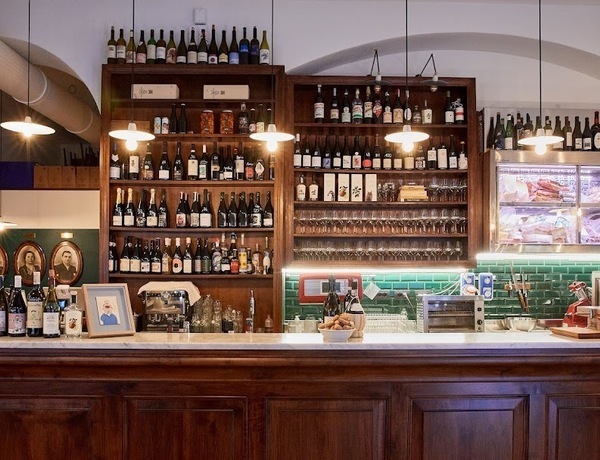
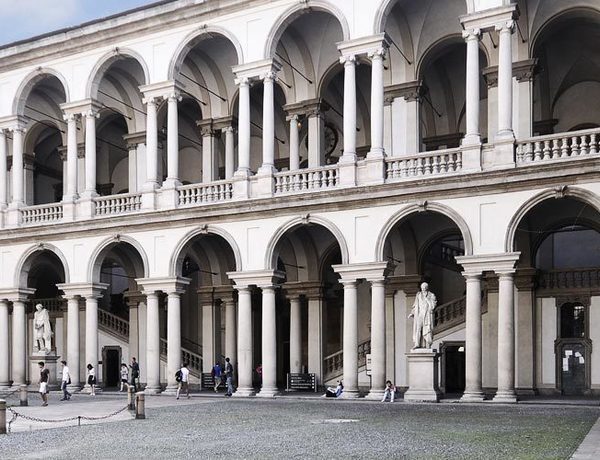
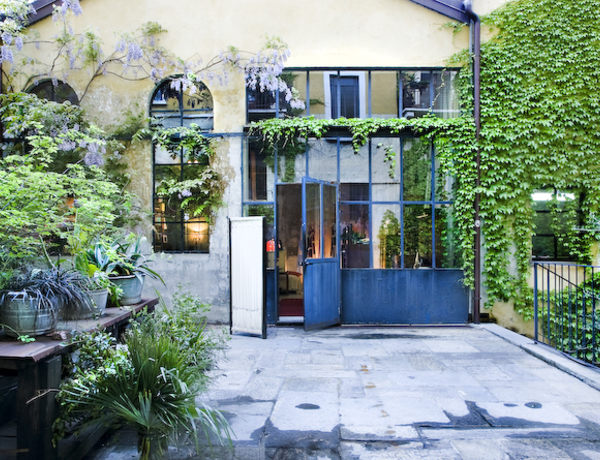
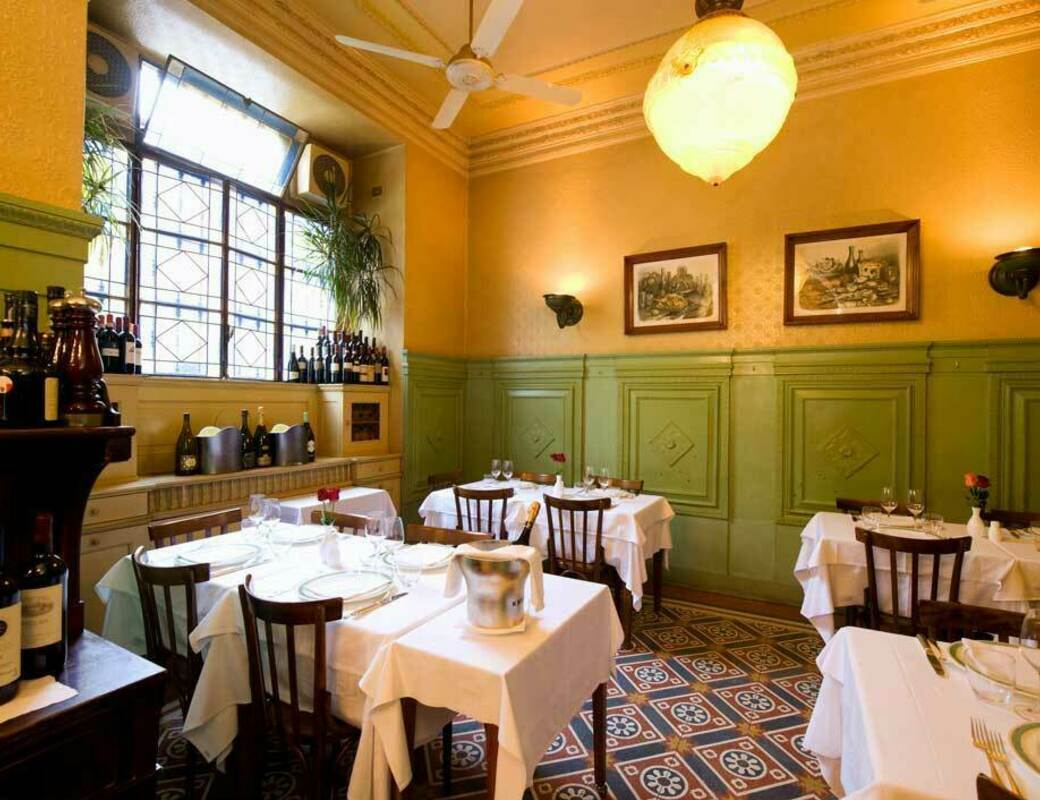
Fancy restaurant for special occasions. Wonderful service in a beautiful location.

Website
giacomomilano.com
Address
Da Giacomo, 6 Via Pasquale Sottocorno, Milan, Italy
Current city: New York
Other cities: LondonMilan
I am a creative director, based between London and NYC where I design homeware and interior spaces. I love to travel - finding (and sharing) the best local restaurants, bars, galleries and shops on my travels brings me joy. Find my design work @clarewalsh and my travel tips (coming soon) @roomservice_world
 

More Places in Milan 60

Gió Marconi gallery started in 1990 under the initiative of Gió Marconi who created the Studio Marconi 17, an experimental space for young artists and art critics that he ran from 1986 to 1990. At the beginning, the new gallery was directed by Gió and his father Giorgio, who had founded the Studio Marconi (1965-1992); now, Gió Marconi gallery mainly focuses on contemporary positions while it also continues to include historical artists of the Studio Marconi into its programme. Gió Marconi is interested in the works of the European and international avant-garde, showing artists such as Franz Ackermann, Trisha Baga, John Bock, Kerstin Brätsch, Matthew Brannon, André Butzer, Alex Da Corte, Nathalie Djurberg & Hans Berg, Simon Fujiwara, Wade Guyton, Allison Katz, Annette Kelm, Sharon Lockhart, Michel Majerus, Oliver Osborne, Jorge Pardo, Tobias Rehberger, Markus Schinwald, Dasha Shishkin, Catherine Sullivan, Grazia Toderi, Fredrik Vaerslev, Atelier Van Lieshout, Francesco Vezzoli, Amelie von Wulffen. From 1965 until now, exhibitions by the following artists have been realized by the Studio Marconi and Gió Marconi gallery: Valerio Adami, Enrico Baj, Georg Baselitz, Joseph Beuys, Peter Blake, Alighiero Boetti, Alberto Burri, Alexander Calder, Anthony Caro, Enrico Castellani, Patrick Caulfield, Mario Ceroli, Marc Chagall, Christo, James Coleman, Gianni Colombo, Willem de Kooning, Sonia Delaunay, Lucio Del Pezzo, Antonio Dias, Bruno Di Bello, Piero Dorazio, Lucio Fontana, Sam Francis, Richard Hamilton, David Hockney, Hsiao Chin, Anselm Kiefer, Martin Kippenberger, Franz Kline, Lee U Fan, Man Ray, Giuseppe Maraniello, Joan Mirò, Maurizio Mochetti, Aldo Mondino, Francois Morellet, Keizo Moroshita, Ugo Mulas, Louise Nevelson, Helmut Newton, Gastone Novelli, Giulio Paolini, Gianfranco Pardi, H.P.Paris, A.R.Penck, Francis Picabia, Pablo Picasso, Arnaldo Pomodoro, Mimmo Rotella, Mario Schifano, Daniel Spoerri, Aldo Spoldi, Emilio Tadini, Antoni Tapies, Herve Telemaque, Joe Tilson, Giuseppe Uncini, Emilio Vedova, Tom Wesselman, William T. Wiley, Christopher Wool.
Read More
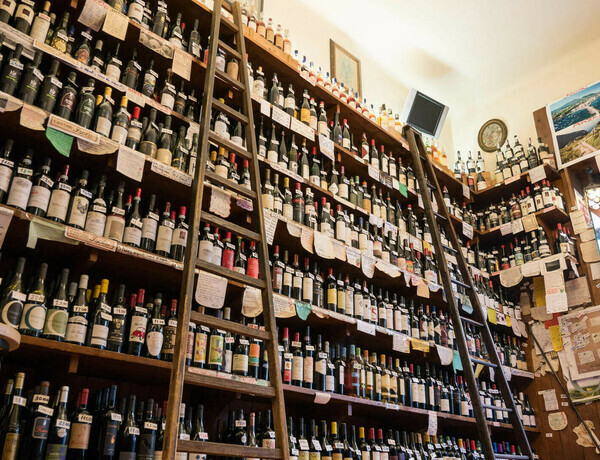
Wine bar serving a great selection of wines by the glass and bottle, alongside a selection of small plates. Lovely interior and friendly staff. Booking suggested.
Read More
Massimo De Carlo gallery was founded in Milano in 1987. Since the beginning Massimo De Carlo gallery program included young and prominent artists such as, among others, Alighiero Boetti, Rudolf Stingel, Maurizio Cattelan, and Yan Pei-Ming. The global affirmation of these and the other artists of the gallery has favoured its on-going success. For 30 years Massimo De Carlo has been playing a fundamental role in bringing the most interesting voices of international art to the Italian scene, and Italian artists into the global arena. This contributed to the promotion and establishment of a vital dialogue between the artists and national and international institutions, encouraging relationships between galleries, critics, curators, and collectors. Throughout the years, the gallery’s artists have been shown in international museums and biennials, and thus obtained an outstanding place into important public and private art collections. Since 2019 Galleria Massimo De Carlo's new headquarters are located at Casa Corbellini-Wassermann, situated in Viale Lombardia 17, which was built in the early 1930s (1934-1936) by the renowned Italian architect Piero Portaluppi.
Read More
"I believe we are at a time in society where open and honest communication is not only necessary, but revolutionary. When governments and political systems are no longer a reference point for progress, we look to other places, such as creative institutions, to facilitate that dialogue. Our aim is to change the definition of what it is to be a cultural centre; the Triennale will be a place of reflection and debate, connected with the contemporary culture in a dynamic way that offers new point of view on topics that lie at the very core of our global society." Stefano Boeri, President, 2018
Read More
The Milan venue of Fondazione Prada, conceived by architecture firm OMA—led by Rem Koolhaas—expands the repertoire of spatial typologies in which art can be exhibited and shared with the public. Characterized by an articulated architectural configuration which combines seven existing buildings with three new structures (Podium, Cinema and Torre), the venue is the result of the transformation of a distillery dating back to the 1910’s. In the project conceived by OMA, two conditions coexist: preservation and the creation of a new architecture which, although separate, confront each other in a state of permanent interaction. Located in Largo Isarco, in the south of Milan, the compound develops on an overall surface of 19.000 m2/205,000 ft2. Torre marks the completion of the Milan venue. The 60-meters high building is realized in exposed white concrete. Each of the nine floors of Torre offers an original perception of the internal environments thanks to a specific combination of three spatial parameters: plan dimension, clear height and orientation. Half of the levels is in fact developed on a rectangular floor plan, while the other half displays a trapezoid one. The clear height of the ceilings increases from bottom to top, varying from 2,7 meters on the first floor to 8 meters on the top level. The external façades are characterized by an alternation of concrete and glass surfaces, which allows exposure from a northern, eastern or western side on the different floors, whereas the top gallery space is exposed to zenithal light. The southern side of Torre presents a diagonal structure inside which a panoramic elevator is integrated. As stated by Rem Koolhaas: “The Fondazione is not a preservation project and not a new architecture. Two conditions that are usually kept separate here confront each other in a state of permanent interaction–offering an ensemble of fragments that will not congeal into a single image, or allow any part to dominate the others. New, old, horizontal, vertical, wide, narrow, white, black, open, enclosed – all these contrasts establish the range of oppositions that define the new Fondazione. By introducing so many spatial variables, the complexity of the architecture will promote an unstable, open programming, where art and architecture will benefit from each other’s challenges”.
Read More
Argentina
Austria
Bosnia and Herzegovina
Colombia
Croatia
Czechia
Ecuador
Finland
Georgia
Hong Kong
Iceland
Indonesia
Ireland
Israel
Latvia
Lithuania
Malta
Morocco
New Zealand
Oman
Pakistan
Panama
Philippines
Portugal
Puerto Rico
Romania
Serbia
Singapore
Slovenia
South Africa
South Korea
Sri Lanka
Taiwan
Thailand
Ukraine
United Arab Emirates
Uruguay