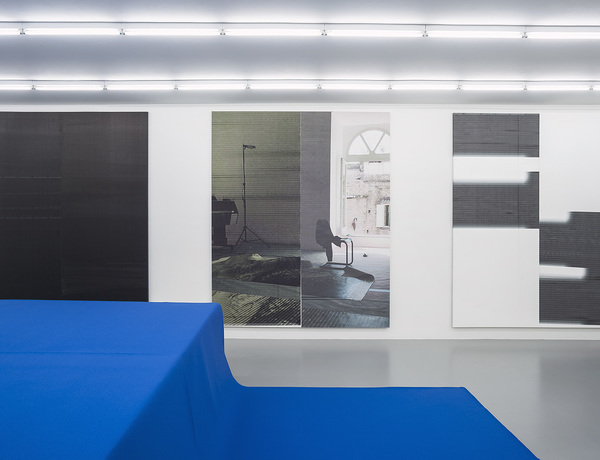
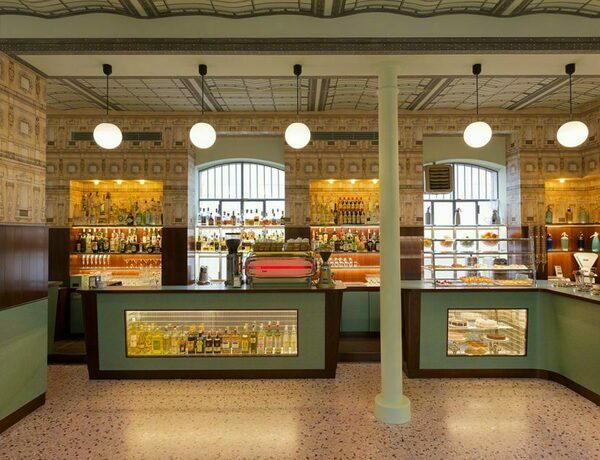
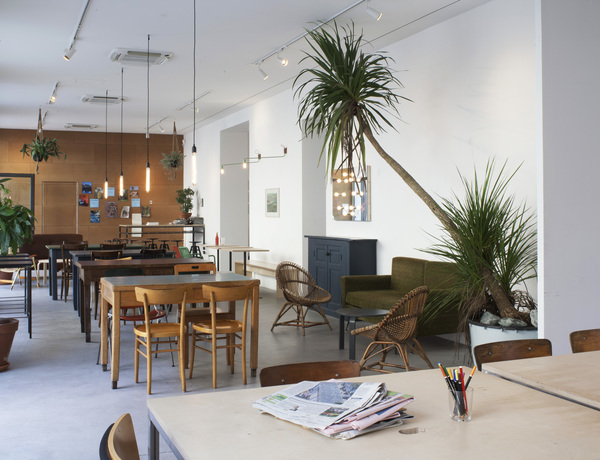
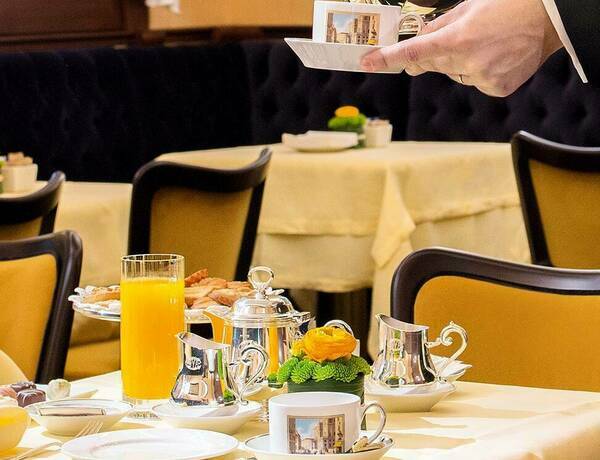
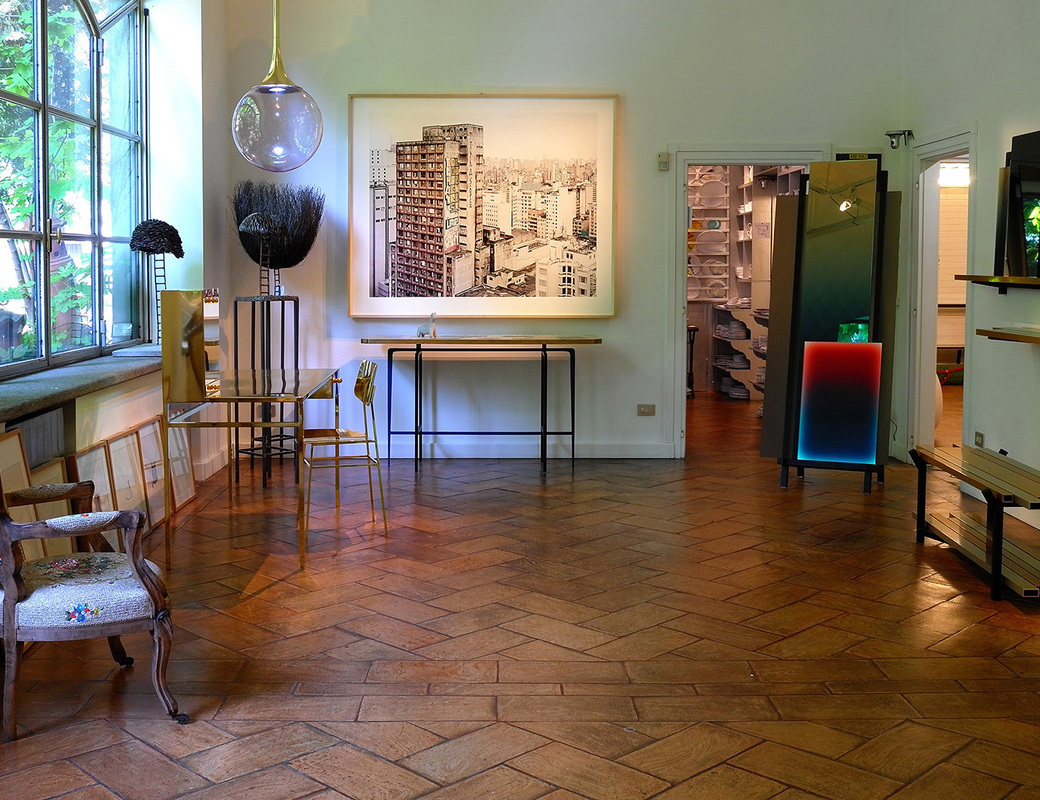
Gallery Rossana Orlandi was opened in 2002 in a former tie Factory in the Magenta neighbor, Galleria Rossana Orlandi has been forecasting along the years new and upcoming designers and establishing the premise as one of the most revered platform for avant-garde Design and Lifestyle. Started her activity focusing on the rising dutch design wave with designers such Piet Hein Eek, Maarten Baas and Nacho Carbonell the research has moved widely around the world creating a catalog which reflects the most innovative scenes from Europe to Asia to America. The space is articulated in a not traditional way mixing together, showroom, a retail store, offices and a courtyard for events and meeting with no boundaries between the different activities.
Website
rossanaorlandi.com
Address
Rossana Orlandi, 14/16 Via Matteo Bandello, Milan, Italy
Current city: Milan
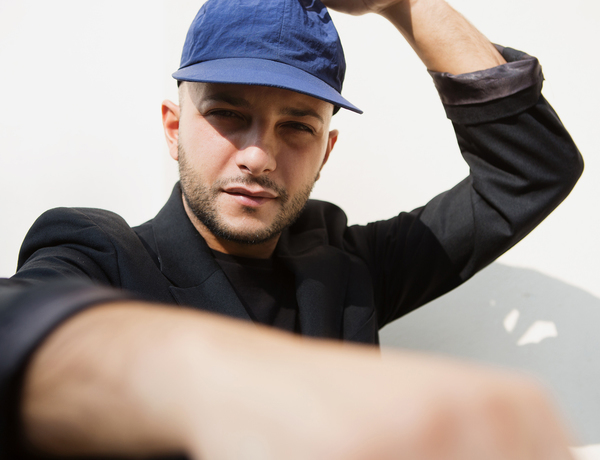
DOMENICO DE CHIRICO: ITALY, INDEPENDENT CURATOR. Domenico de Chirico is an independent curator from Italy. Born in Bari in 1983, he lives and works in Milan. From 2011 until 2015 he was a professor in “Visual Culture” and “Trend Research” at Milan’s European Institute of Design (IED). He collaborates with a number of international artists, galleries, institutions, art fairs, art prizes, and magazines worldwide. He has been artistic director at DAMA Fair, Turin since 2016. He was also a visiting tutor at Goldsmiths, University of London (2018). Upcoming exhibitions and researches (2019/20): Accademia di belle arti di Urbino, academy of fine arts located in Urbino, Marche, Italy (guest lecturer); Bienvenue Art Fair, Paris (prize jury member); Fotopub Festival, Novo Mesto, Slovenia (guest lecturer). Exhibitions in various venues and cities, among which: Turin, Milan, Berlin, Munich, Lisbon, Miami, Brescia, Istanbul, Florence, Venice, Rome, Prague, Mallorca, and so forth.
 

More Places in Milan 60

Posted by Mari Di Pilla
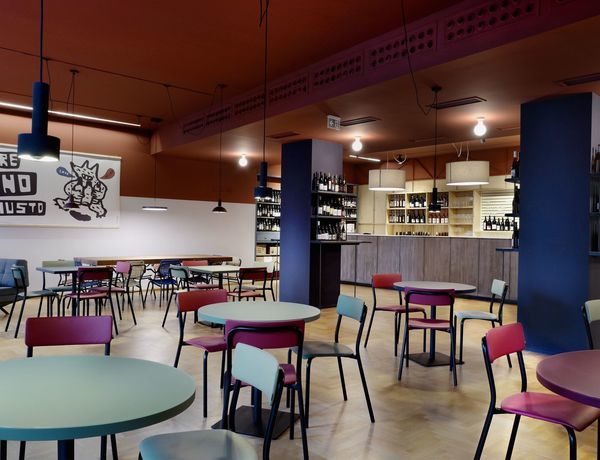
Nice atmosfere, cool staff, opened from the first time in the morning til late night... Iter is a good choice for breakfast with coffee and brioche (the way Italians call the croissant), working days lunch (the have a fixed menu) and also for drinks - the menu changes seasonally and has always interesting options. Thanks to its location in a small street between the naviglio grande and pavese, the tourists somehow don't find it.
Read More
"I believe we are at a time in society where open and honest communication is not only necessary, but revolutionary. When governments and political systems are no longer a reference point for progress, we look to other places, such as creative institutions, to facilitate that dialogue. Our aim is to change the definition of what it is to be a cultural centre; the Triennale will be a place of reflection and debate, connected with the contemporary culture in a dynamic way that offers new point of view on topics that lie at the very core of our global society." Stefano Boeri, President, 2018
Read More
An architectural gem: immersed in an ample private garden with a swimming pool and a tennis court and set in the center of Milan, the Necchi Campiglio Villa was completed by the architect Piero Portaluppi in 1935. Commissioning the structure was the Necchi Campiglio family, part of the rich and elegant industrial middle class of Milan in the 1930s. The disposition of the interior spaces corresponds to the traditional layout of noble homes: the daytime areas on the ground floor, the bedrooms on the first floor, the service rooms in the areas under the roof, and the den as well as the changing rooms and the bathrooms for the pool in the basement. The Necchi Campiglio family wanted above all to distance themselves from the traditions of their day, and planned ample areas dedicated to the reception of guests and to the social whirl: the dining room, the smoking room, the library and the grand salon. Right after WWII, areas of the villa underwent changes effected by the architect Tomaso Buzzi, who sweetened the linearity of Portaluppi’s style, and inserted aspects inspired of the 18th century, especially those in the style of Louis the 15th of France.
Read More
Gió Marconi gallery started in 1990 under the initiative of Gió Marconi who created the Studio Marconi 17, an experimental space for young artists and art critics that he ran from 1986 to 1990. At the beginning, the new gallery was directed by Gió and his father Giorgio, who had founded the Studio Marconi (1965-1992); now, Gió Marconi gallery mainly focuses on contemporary positions while it also continues to include historical artists of the Studio Marconi into its programme. Gió Marconi is interested in the works of the European and international avant-garde, showing artists such as Franz Ackermann, Trisha Baga, John Bock, Kerstin Brätsch, Matthew Brannon, André Butzer, Alex Da Corte, Nathalie Djurberg & Hans Berg, Simon Fujiwara, Wade Guyton, Allison Katz, Annette Kelm, Sharon Lockhart, Michel Majerus, Oliver Osborne, Jorge Pardo, Tobias Rehberger, Markus Schinwald, Dasha Shishkin, Catherine Sullivan, Grazia Toderi, Fredrik Vaerslev, Atelier Van Lieshout, Francesco Vezzoli, Amelie von Wulffen. From 1965 until now, exhibitions by the following artists have been realized by the Studio Marconi and Gió Marconi gallery: Valerio Adami, Enrico Baj, Georg Baselitz, Joseph Beuys, Peter Blake, Alighiero Boetti, Alberto Burri, Alexander Calder, Anthony Caro, Enrico Castellani, Patrick Caulfield, Mario Ceroli, Marc Chagall, Christo, James Coleman, Gianni Colombo, Willem de Kooning, Sonia Delaunay, Lucio Del Pezzo, Antonio Dias, Bruno Di Bello, Piero Dorazio, Lucio Fontana, Sam Francis, Richard Hamilton, David Hockney, Hsiao Chin, Anselm Kiefer, Martin Kippenberger, Franz Kline, Lee U Fan, Man Ray, Giuseppe Maraniello, Joan Mirò, Maurizio Mochetti, Aldo Mondino, Francois Morellet, Keizo Moroshita, Ugo Mulas, Louise Nevelson, Helmut Newton, Gastone Novelli, Giulio Paolini, Gianfranco Pardi, H.P.Paris, A.R.Penck, Francis Picabia, Pablo Picasso, Arnaldo Pomodoro, Mimmo Rotella, Mario Schifano, Daniel Spoerri, Aldo Spoldi, Emilio Tadini, Antoni Tapies, Herve Telemaque, Joe Tilson, Giuseppe Uncini, Emilio Vedova, Tom Wesselman, William T. Wiley, Christopher Wool.
Read More
First we should say the flaw, Trattoria Arlati is a bit far away from the city centre and not really easy to get to with public transport. Having said that, it’s the most charming restaurant where we’ve ever been. We always go there and always get the same menu, “Risotto al Salto” and “Ossobuco alla Milanese” of course, and it’s always delicious but is not just the food. In the 60’s it was really popular among artists, in the 70’s bands started to play in the basement and now when you get in you immediately feel it. It’s a charismatic place.
Read More
Argentina
Austria
Bosnia and Herzegovina
Colombia
Croatia
Czechia
Ecuador
Finland
Georgia
Hong Kong
Iceland
Indonesia
Ireland
Israel
Latvia
Lithuania
Malta
Morocco
New Zealand
Oman
Pakistan
Panama
Philippines
Portugal
Puerto Rico
Romania
Serbia
Singapore
Slovenia
South Africa
South Korea
Sri Lanka
Taiwan
Thailand
Ukraine
United Arab Emirates
Uruguay