About Derrick
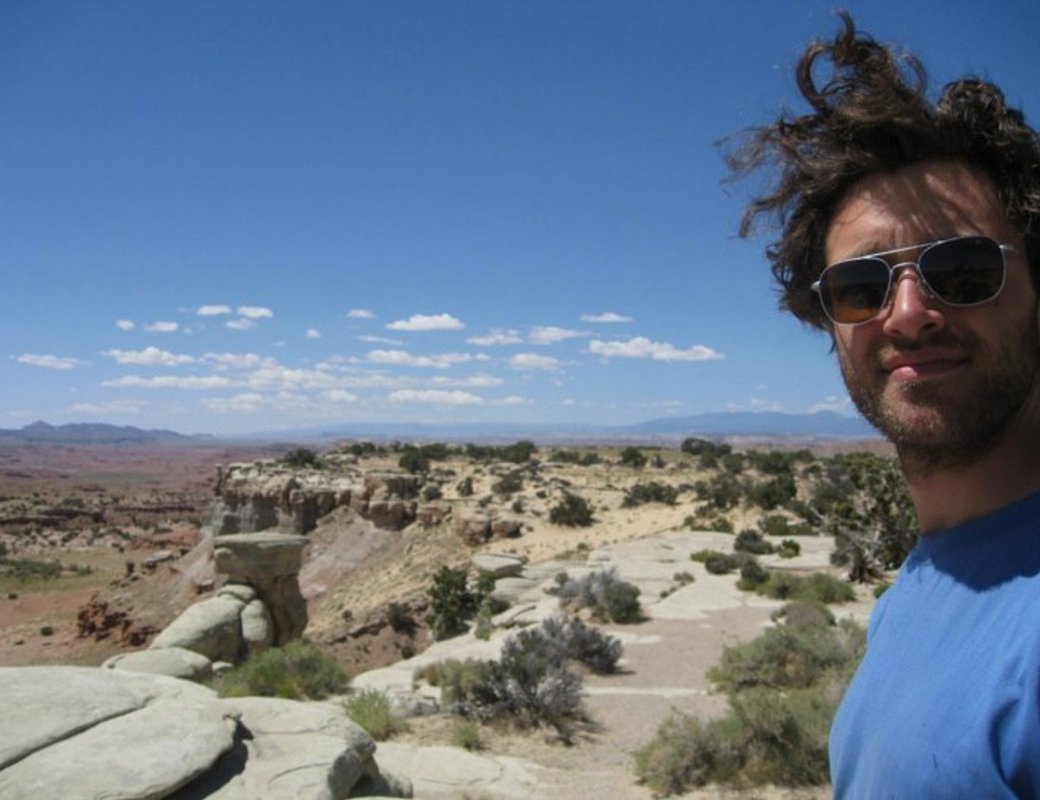
A Design Strategist with a focus on qualitative research, I have extensive global experience gathering and translating consumer insights that improve design on both emotional and functional levels. I champion users within the innovation process to create better experiences at home, work and play, while helping key stakeholders align on successful business strategies. Lately I’ve partnered with designers from every discipline to create a series of visual brand languages for a world-leading surgical robotics company. The Cooper-Hewitt National Design Museum published my book, “Design for Repair: Things Can Be Fixed,” under the DesignFile imprint in May 2015. Metropolis, Fast Company, and Core77 have published my writing recently.
https://derrickmead.co/
Current city: New York
A Design Strategist with a focus on qualitative research, I have extensive global experience gathering and translating consumer insights that improve design on both emotional and functional levels. I champion users within the innovation process to create better experiences at home, work and play, while helping key stakeholders align on successful business strategies. Lately I’ve partnered with designers from every discipline to create a series of visual brand languages for a world-leading surgical robotics company. The Cooper-Hewitt National Design Museum published my book, “Design for Repair: Things Can Be Fixed,” under the DesignFile imprint in May 2015. Metropolis, Fast Company, and Core77 have published my writing recently.

 

More People in New York 387

Chris Ballantyne’s work focuses on vernacular architecture and observation of the American landscape.  Banal features of suburban and industrial zones are sources for paintings that highlight the quirky and absurd.  Ballantyne states that, “Growing up in a military family and moving to different parts of the country, there was a certain familiarity to the kinds of houses and neighborhoods. They were a series of suburban developments built in separate regions of the country, always on the outskirts of larger cities, at the exit ramps of interstate highways, and all very similar in age and design.  My own notions of space developed out of this cultural landscape which was striving for an indidvidual sense of personal space,  consciously economic, and somewhere between urban and rural.” Dysfunctional structures are flawless in their strangeness, made beautiful through symmetry, simplified lines and flat, subdued colors. Ballantyne eliminates detail to emphasize the subtleties of the way we experience space and our attempts at containment. He extends these concepts further by expanding the imagery of his paintings beyond the picture plane and onto the surrounding walls. “Most of my works involve combinations of various places, drawn from memory. As well, my own interests in skateboarding and surfing altered how I saw  the use of these structures ranging from empty pools, sidewalk curbs, to ocean jetties in a way that tied in to my sense of this larger push and pull between culture and nature.” With shrewd restraint, Ballantyne accentuates the antisocial effects of our built environment with a hint of humor and plenty of ambiguity. A curious emptiness permeates the work of Chris Ballantyne. Graphically rendered buildings, pools, parking lots, and fences take on new meanings and amplified significance, isolated on flat fields of color.
Read More
Graphic designer from Beirut based in New York
Read More
Chris Rubino is a visual artist living in peace in New York with 8.5 million other people.
Read More
Argentina
Austria
Bosnia and Herzegovina
Colombia
Croatia
Czechia
Ecuador
Finland
Georgia
Hong Kong
Iceland
Indonesia
Ireland
Israel
Latvia
Lithuania
Malta
Morocco
New Zealand
Oman
Pakistan
Panama
Philippines
Portugal
Puerto Rico
Romania
Serbia
Singapore
Slovenia
South Africa
South Korea
Sri Lanka
Taiwan
Thailand
Ukraine
United Arab Emirates
Uruguay