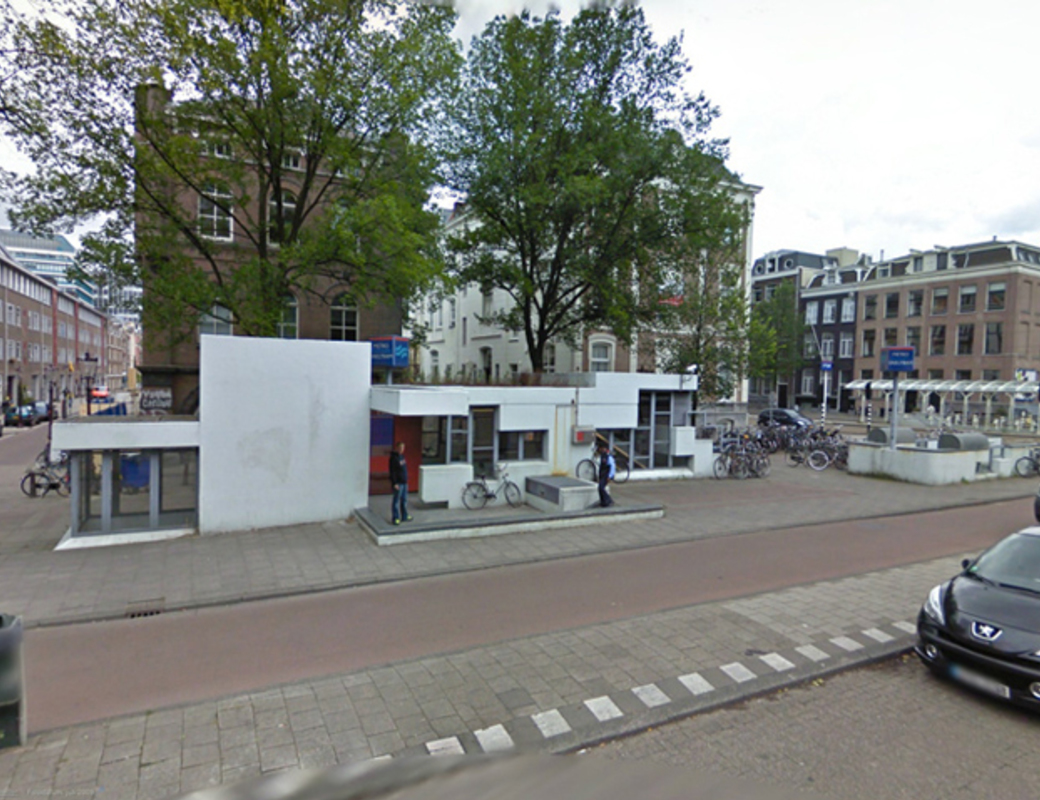
Almost every underground station in Amsterdam has a fascinating story behind it. My favourite one is metro station ‘Weesperplein,’ because it has a hidden station underneath the actual station that was meant for the ‘Singellijn.’ However, that line was never build and the second station remained useless. Besides that the hidden station was also equipped to serve as a shelter during the cold war. The large doors that were meant to hermetically close the building are still visible at both ends of the platform. Other small details, like the panels in the ceiling than can be used as tables when turned around, are also silent references to the building’s former use. 
Address
Metrostation Weesperplein
, Weesperplein, Amsterdam, Netherlands
Current city: Amsterdam
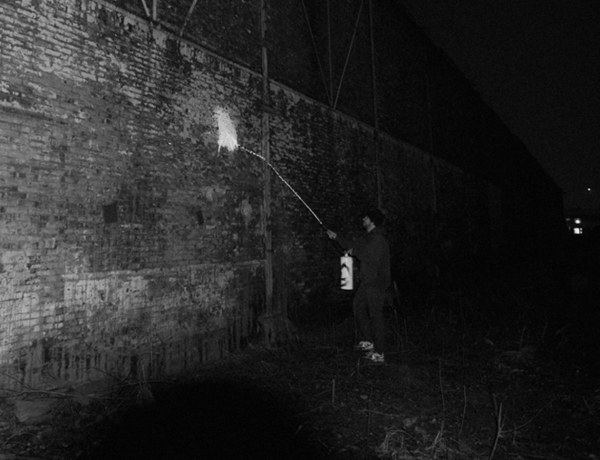
My works can be described as ‘post-graffiti art’. The approach, attitude and application of my designs are heavily influenced by graffiti and street art. I am fascinated by today’s zeitgeist but am also critical about it. Street art is an art movement in which many inspiring things are happening and where I feel at home. With a spray I can visually express what I cannot do with a pencil. However, I would like to go deeper than the sometimes superficial appearance of graffiti and street art and highlight those aspects that make the viewer think. I would like to express my thoughts visually, either in a clear statement or in an experiment with a still unknown outcome, which can lead to something new.
 

More Places in Amsterdam 100

This place has, beside the excellent pastry, the best shrimp croquettes in town. 
Read More
Site specific architecture piece Deltawerk located in Flevoland by RAAAF | Atelier de Lyon, 2018
Read More
Banging my head against the ceiling on the first floor doesn’t stop me from drinking a coffee in café Latei at Nieuwmarkt. I love it here, especially on rainy days, which is most days in the Netherlands. This small cosy café filled with a thousand colours warms me up.
Read More
Replacing a broken kitsch plate with a new kitsch plate in the ever so pretentious Negen Straatjes (Nine Streets).
Read More
The fence around De Nederlandsche Bank on the Frederiksplein is a true optical experience. While passing the building, a rhythmic, dynamic pattern appears and disappears in the trellis of the fence. The figures on the sides of the rails were designed in 1992 by artist Peter Struycken, a pioneer in the area of environmental art and generating computer-program based image, light and colour compositions.
Read More
Argentina
Austria
Bosnia and Herzegovina
Colombia
Croatia
Czechia
Ecuador
Finland
Georgia
Hong Kong
Iceland
Indonesia
Ireland
Israel
Latvia
Lithuania
Malta
Morocco
New Zealand
Oman
Pakistan
Panama
Philippines
Portugal
Puerto Rico
Romania
Serbia
Singapore
Slovenia
South Africa
South Korea
Sri Lanka
Taiwan
Thailand
Ukraine
United Arab Emirates
Uruguay