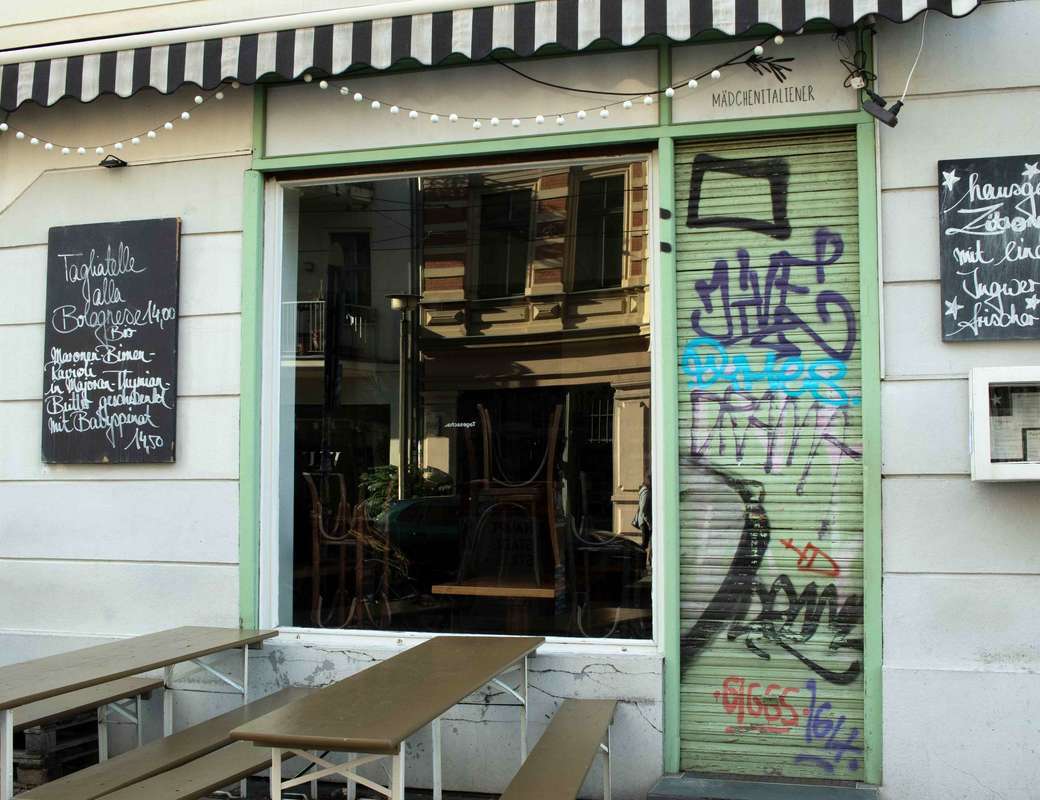
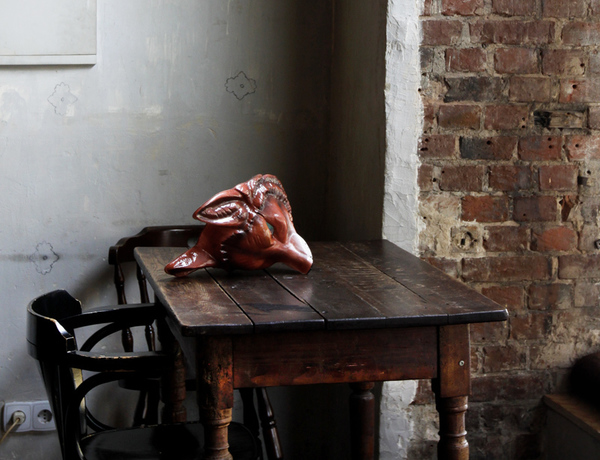
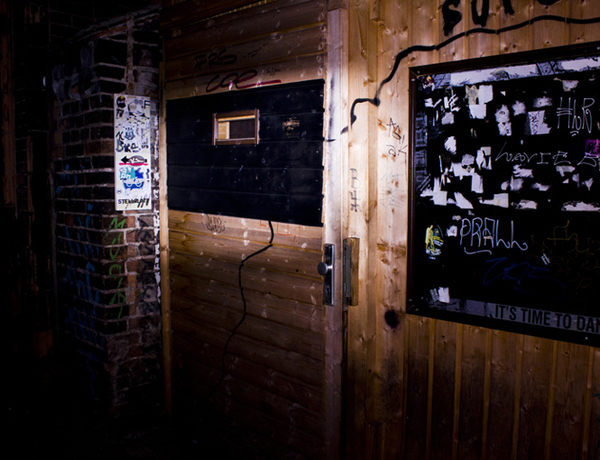
A very close friend of mine owns this bar. It looks tiny from the outside, but it has two rooms you have to pass until you get to last one which is a discofloor. I play music there from time to time and I am always surrounded by nice people und friends.
Chalet is one of many clubs in Berlin. It's a very interesting option if you want to know what Berlins night can be. Music is great and environment too. It 's a decadent building in the inside with curious corners...
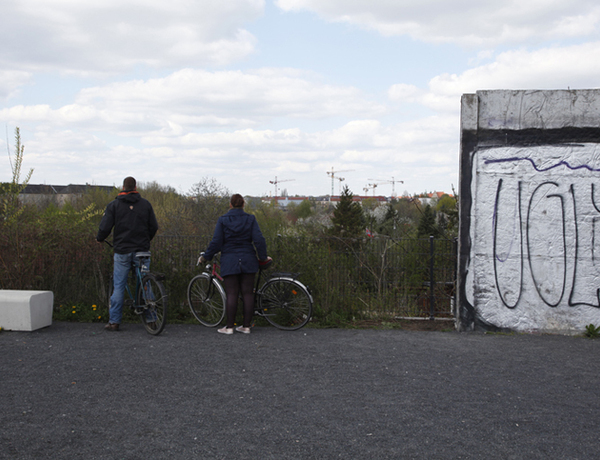
The is an old geisterbahnhof, or railway station, in the Prenzlauer Berg district of Berlin, Germany. It is served by the Berlin S-Bahn and the M13 line of the Berlin Straßenbahn. The station opened on October 1, 1935, at the junction of the Nordbahn line from Berlin to Stralsund with the railway line to Szczecin where the eponymous street named after Bornholm Island crossed the tracks. As Bornholmer Straße station lay right at the Berlin Wall it was closed on August 13, 1961, turning it into one of Berlin's ghost stations, passed by eastern and western S-Bahn trains without stopping. After German reunification Bornholmer Straße was reopened on December 22, 1990. Today, you can still go there to see remnants of the wall, and where people flooded in when the wall came down in 1989. (In the evening of November 9, 1989, thousands of East Berliners and GDR citizens assembled at the bridge demanding entry to West Berlin. At 9.20 p.m. local guards were the first to open the checkpoint and allow people passing through freely to West Berlin, where they were greeted enthusiastically. The event marked the commencement of the fall of the Berlin Wall.).
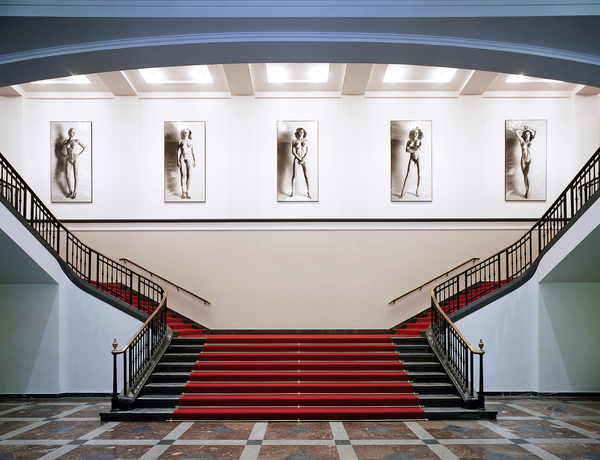
A small but never-the-less great museum for photography-lovers. It’s there that I fell in love with dear Helmut.
Mr. Newton was this man who loved women bodies, dramatic stagings, and his wife. An original who was down-to-earth and respectful despite living a glamorous life.
After every visit I feel inspired, more confident and proud to be a woman and own my body.
You will find at the Helmut Newton Fondation a collection of his photography work, personal belongings, and condolence letters wrote to his wife after he passed away. In addition of that, a space dedicated to June Newton’s work, a little cinema room as well as two temporary exhibitions for contemporary artists ( check website for more infos ).
Helmut Newton will remain one of my human and artistic crush, I can only recommend to pay yourself a visit there to learn about his work, his life, his love.
p.s.: and it’s some hundred meters only from the C/O Gallery.
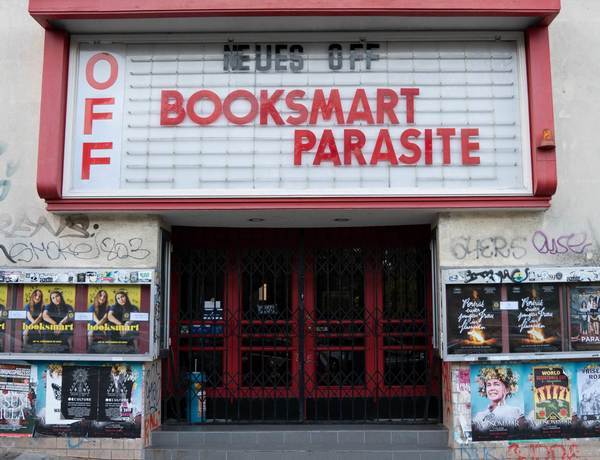
Cinema with original fifties interior, close to Hermann Platz. Like all cinemas from the York Cinema Group in Berlin, it features a diverse program of independent movies (mostly original versions with German subtitles).