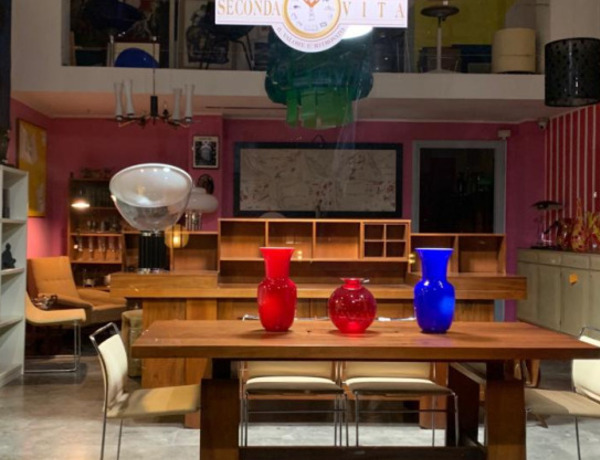
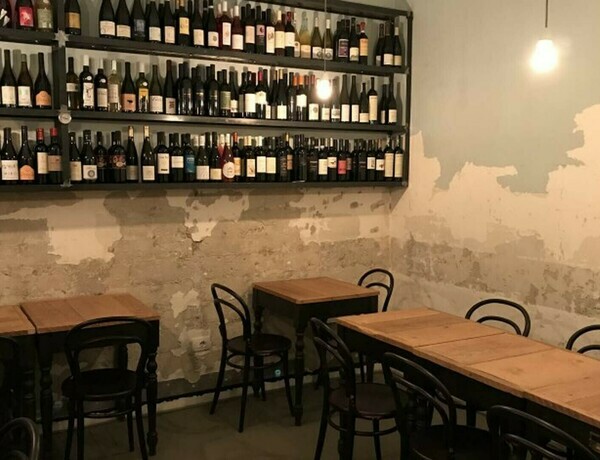
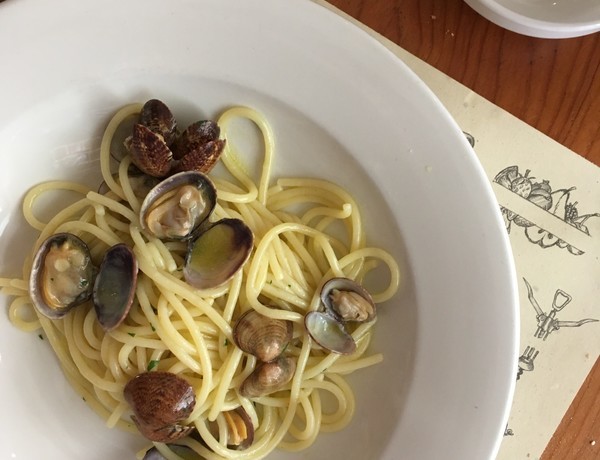
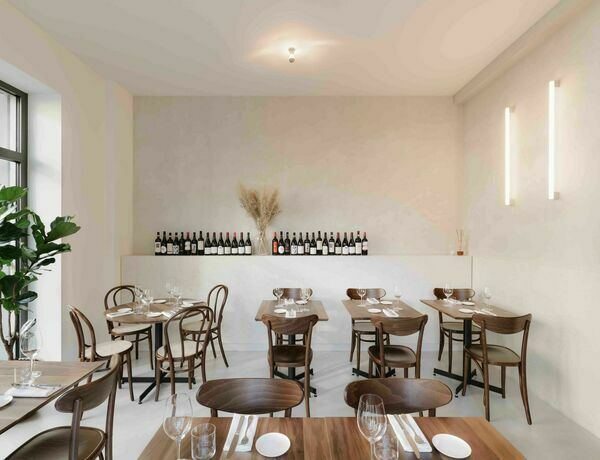
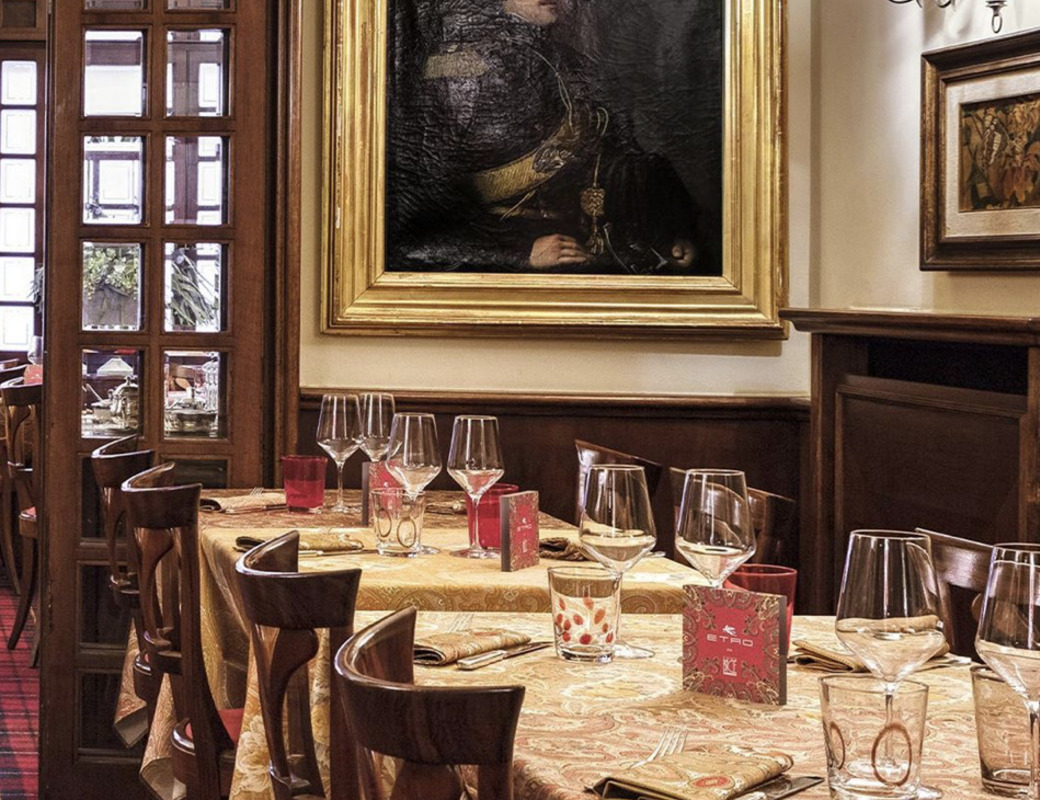
Classic Milanese restaurant for a special occasion. Definitely try the risotto!

Website
bicemilano.it
Address
Bice Restaurant, 12 Via Borgospesso, Milan, Italy
Current city: New York
Other cities: LondonMilan
I am a creative director, based between London and NYC where I design homeware and interior spaces. I love to travel - finding (and sharing) the best local restaurants, bars, galleries and shops on my travels brings me joy. Find my design work @clarewalsh and my travel tips (coming soon) @roomservice_world
 

More Places in Milan 60

"I believe we are at a time in society where open and honest communication is not only necessary, but revolutionary. When governments and political systems are no longer a reference point for progress, we look to other places, such as creative institutions, to facilitate that dialogue. Our aim is to change the definition of what it is to be a cultural centre; the Triennale will be a place of reflection and debate, connected with the contemporary culture in a dynamic way that offers new point of view on topics that lie at the very core of our global society." Stefano Boeri, President, 2018
Read More
The Milan venue of Fondazione Prada, conceived by architecture firm OMA—led by Rem Koolhaas—expands the repertoire of spatial typologies in which art can be exhibited and shared with the public. Characterized by an articulated architectural configuration which combines seven existing buildings with three new structures (Podium, Cinema and Torre), the venue is the result of the transformation of a distillery dating back to the 1910’s. In the project conceived by OMA, two conditions coexist: preservation and the creation of a new architecture which, although separate, confront each other in a state of permanent interaction. Located in Largo Isarco, in the south of Milan, the compound develops on an overall surface of 19.000 m2/205,000 ft2. Torre marks the completion of the Milan venue. The 60-meters high building is realized in exposed white concrete. Each of the nine floors of Torre offers an original perception of the internal environments thanks to a specific combination of three spatial parameters: plan dimension, clear height and orientation. Half of the levels is in fact developed on a rectangular floor plan, while the other half displays a trapezoid one. The clear height of the ceilings increases from bottom to top, varying from 2,7 meters on the first floor to 8 meters on the top level. The external façades are characterized by an alternation of concrete and glass surfaces, which allows exposure from a northern, eastern or western side on the different floors, whereas the top gallery space is exposed to zenithal light. The southern side of Torre presents a diagonal structure inside which a panoramic elevator is integrated. As stated by Rem Koolhaas: “The Fondazione is not a preservation project and not a new architecture. Two conditions that are usually kept separate here confront each other in a state of permanent interaction–offering an ensemble of fragments that will not congeal into a single image, or allow any part to dominate the others. New, old, horizontal, vertical, wide, narrow, white, black, open, enclosed – all these contrasts establish the range of oppositions that define the new Fondazione. By introducing so many spatial variables, the complexity of the architecture will promote an unstable, open programming, where art and architecture will benefit from each other’s challenges”.
Read More
Spazio Rossana Orlandi, a store and gallery dedicated to avantgarde design, located in a former tie factory.
Read More
Starting from the end of the Nineties, the Gallery knew how to cut out its own space and become the reference point to lovers of historical design as well as to people following the evolution of contemporary design, above all within that more learned, poetic and visionary area shifting between production and contemporary art. Nina Yashar, the gallery founder, works with her sister Nilu and a team of five people. Nilufar took part in several editions of Pavillon des Arts et du Design in Paris and is always present at Design Miami/Basel. Nilufar has its own small manifesto, composed of three words: Discovering, Crossing, Creating. Discovering Novecento is the century of design, a source of extraordinary stories and objects which will be dealt with again for a long time, waiting just for the right time to come out of the oblivion. According to Nilufar's vision, modern antique dealing is an old definition. It is necessary to shift towards a less vague word, searching for names, projects, schools, manufactures, countries making history and deserving to be proposed again. Crossing The history of taste is a never-ending exercise of decomposition and re-composition, just like a kaleidoscope... This continuous joining together of pieces and traditions houses an open eye, heedless of labels, able to cross fences created by time, geography and cultural matrixes, aware that assonances and contrasts can be two sides of the same coin. This is the idea of Crossings, the name of two successful exhibitions Nilufar held in 1999 and 2000, a true invitation to build new visions of the world, being far more personal and freer. Creating Milan is an interesting lab and a privileged point to observe the euphoric and restless scene of design. Nilufar gives life to projects, editions, site-specific shows and publications, working both with great masters and emerging authors. Nilufar is operating in the scouting of new talents. Creating means bringing about occasions, sparkles. It means also obtaining new spaces and filling them with value for the future. Here in Italy we know how to do it: Renaissance was born here!
Read More
Massimo De Carlo gallery was founded in Milano in 1987. Since the beginning Massimo De Carlo gallery program included young and prominent artists such as, among others, Alighiero Boetti, Rudolf Stingel, Maurizio Cattelan, and Yan Pei-Ming. The global affirmation of these and the other artists of the gallery has favoured its on-going success. For 30 years Massimo De Carlo has been playing a fundamental role in bringing the most interesting voices of international art to the Italian scene, and Italian artists into the global arena. This contributed to the promotion and establishment of a vital dialogue between the artists and national and international institutions, encouraging relationships between galleries, critics, curators, and collectors. Throughout the years, the gallery’s artists have been shown in international museums and biennials, and thus obtained an outstanding place into important public and private art collections. Since 2019 Galleria Massimo De Carlo's new headquarters are located at Casa Corbellini-Wassermann, situated in Viale Lombardia 17, which was built in the early 1930s (1934-1936) by the renowned Italian architect Piero Portaluppi.
Read More
Argentina
Austria
Bosnia and Herzegovina
Colombia
Croatia
Czechia
Ecuador
Finland
Georgia
Hong Kong
Iceland
Indonesia
Ireland
Israel
Latvia
Lithuania
Malta
Morocco
New Zealand
Oman
Pakistan
Panama
Philippines
Portugal
Puerto Rico
Romania
Serbia
Singapore
Slovenia
South Africa
South Korea
Sri Lanka
Taiwan
Thailand
Ukraine
United Arab Emirates
Uruguay