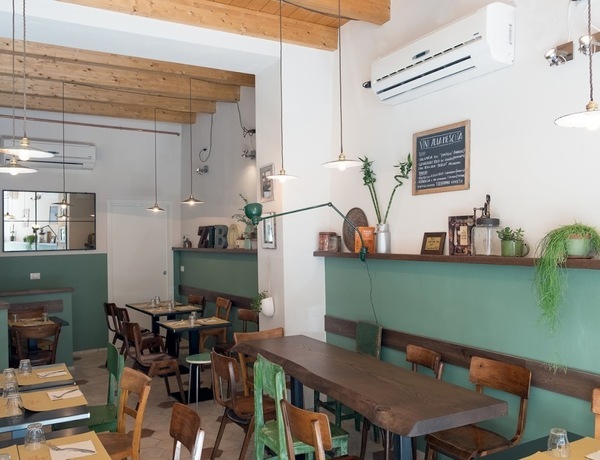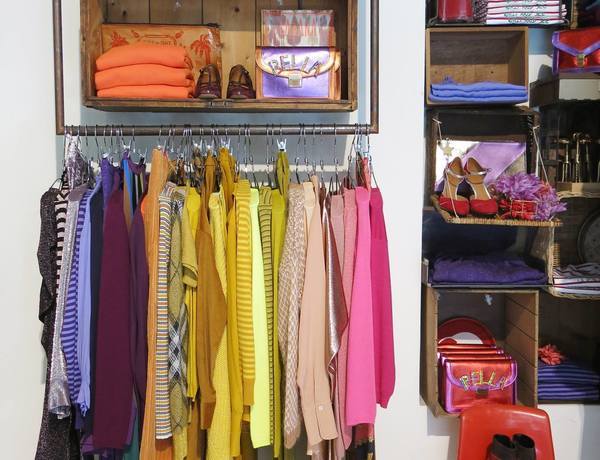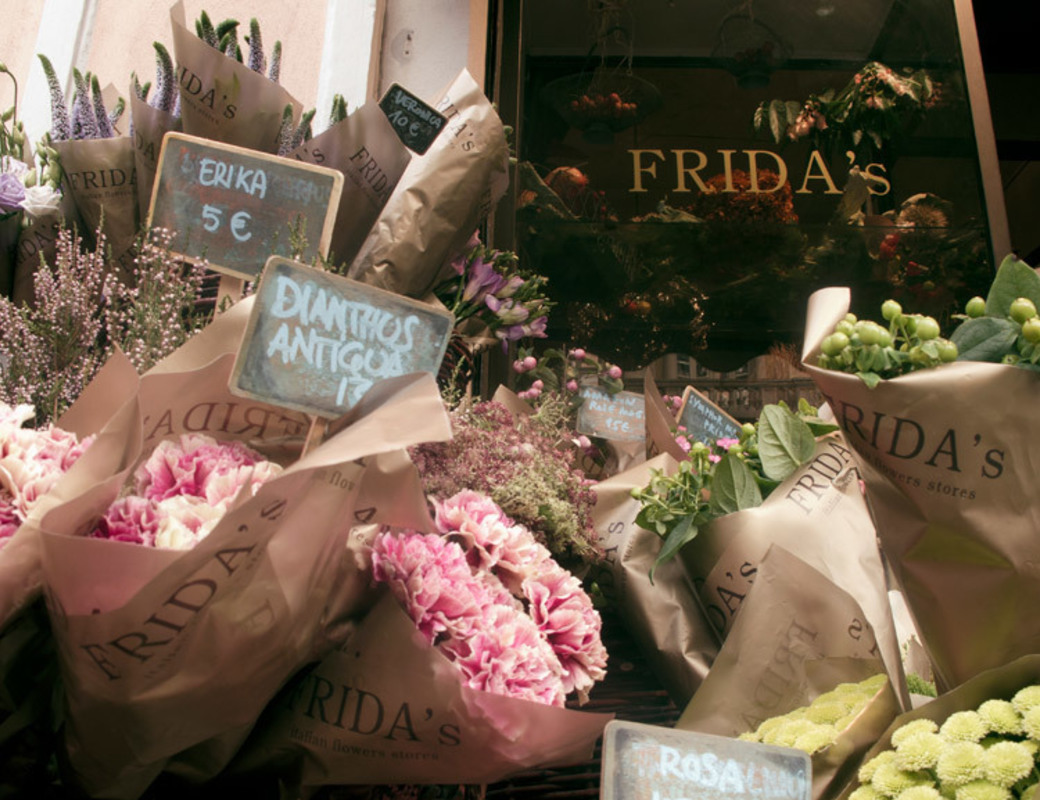
To really reach/understand a city you must live there or, at least, acting like you do. Nothing makes you feel more like a Milanese D.O.C. than stopping by Frida’s on a Sunday morning to buy some flowers. Located in Brera this tiny shop has an extraordinary colour palette of flowers and plants. After that we just take a walk in the neighbourhood holding our bunch of Brassica Oleracea and our day is made.
Website
fridas.it
Address
Frida’s, 18 Corso Garibaldi, Milan, Italy
Current city: Milan
Ruggiero Colonna Romano and Yara De Nicola have been a couple for three years, they live together in Milan with their tiny cocker Maria. Ruggiero works in the environmental field and turn into a DJ in his free time. He is obsessed with photography as a memory record and keeps buying small cameras that he always brings along with him. Yara is a photographer working for fashion magazines such as  Self Service, Elle Collections, Grazia…She is a terrible cook but a passionate eater and is developing an interesting eye in the food area.
 

More Places in Milan 60

The Milan venue of Fondazione Prada, conceived by architecture firm OMA—led by Rem Koolhaas—expands the repertoire of spatial typologies in which art can be exhibited and shared with the public. Characterized by an articulated architectural configuration which combines seven existing buildings with three new structures (Podium, Cinema and Torre), the venue is the result of the transformation of a distillery dating back to the 1910’s. In the project conceived by OMA, two conditions coexist: preservation and the creation of a new architecture which, although separate, confront each other in a state of permanent interaction. Located in Largo Isarco, in the south of Milan, the compound develops on an overall surface of 19.000 m2/205,000 ft2. Torre marks the completion of the Milan venue. The 60-meters high building is realized in exposed white concrete. Each of the nine floors of Torre offers an original perception of the internal environments thanks to a specific combination of three spatial parameters: plan dimension, clear height and orientation. Half of the levels is in fact developed on a rectangular floor plan, while the other half displays a trapezoid one. The clear height of the ceilings increases from bottom to top, varying from 2,7 meters on the first floor to 8 meters on the top level. The external façades are characterized by an alternation of concrete and glass surfaces, which allows exposure from a northern, eastern or western side on the different floors, whereas the top gallery space is exposed to zenithal light. The southern side of Torre presents a diagonal structure inside which a panoramic elevator is integrated. As stated by Rem Koolhaas: “The Fondazione is not a preservation project and not a new architecture. Two conditions that are usually kept separate here confront each other in a state of permanent interaction–offering an ensemble of fragments that will not congeal into a single image, or allow any part to dominate the others. New, old, horizontal, vertical, wide, narrow, white, black, open, enclosed – all these contrasts establish the range of oppositions that define the new Fondazione. By introducing so many spatial variables, the complexity of the architecture will promote an unstable, open programming, where art and architecture will benefit from each other’s challenges”.
Read More
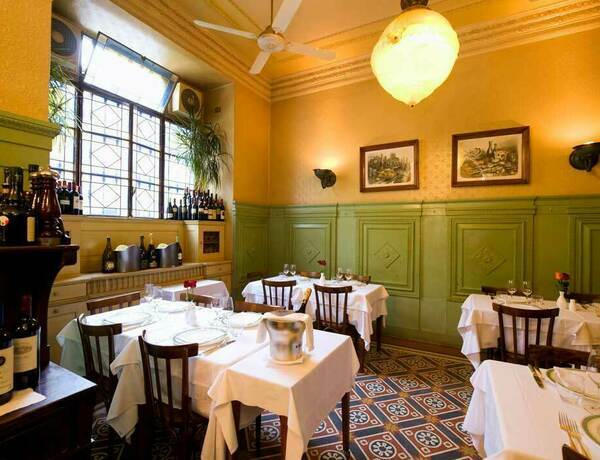
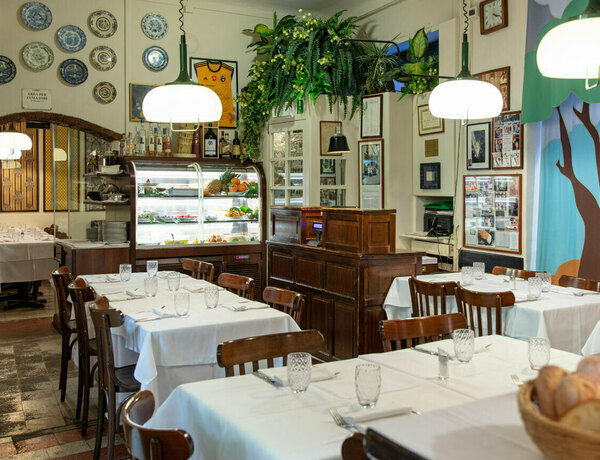
Wine bar serving a great selection of wines by the glass and bottle, alongside a selection of small plates. Lovely interior and friendly staff. Booking suggested.
Read More
Cozy ambient inside, but also with tables on the street, Champagne Socialist is a good place to try natural wines from Europe. You can also go there just to buy a bootle (or more, of course) and drink it at home.
Read More
Pirelli HangarBicocca is a non-profit foundation, established in 2004, which has converted a former industrial plant in Milan into an institution for producing and promoting contemporary art. This dynamic center for experimentation and discovery covers 15,000 square meters, making it one of the largest contiguous exhibition spaces in Europe. It presents major solo shows every year by Italian and international artists, with each project conceived to work in close relation to the architecture of the complex, and explored in depth through a calendar of parallel events. Admission to the space and the shows is completely free of charge, and facilitators are on hand to help the public connect with the art. Since 2013, Vicente Todolí has been the foundation’s Artistic Director. The complex, which once housed a locomotive factory, includes an area for public services and educational activities, and three exhibition spaces whose original twentieth-century architectural features have been left clearly visible: Shed, Navate, and Cubo. As well as its exhibitions program and cultural events, Pirelli HangarBicocca also permanently houses one of Anselm Kiefer’s most important site-specific works, The Seven Heavenly Palaces 2004-2015, commissioned for the opening of Pirelli HangarBicocca. The history of Pirelli HangarBicocca is closely linked to that of Breda, a company incorporated in 1886 by Ingegner Ernesto Breda, who moved it to the Bicocca district from 1903. Pirelli, Falck and Marelli followed suit with their own companies, thus turning the area into one of the most important industrial centres in Italy. In the new 200,000m² factory, Breda mainly manufactured railway carriages, electric and steam locomotives, boilers, farm machinery and equipment and, during the First World War, aeroplanes, projectiles and other products for the war effort. One of these factory buildings was Pirelli HangarBicocca, which at the time was divided into blocks of different types, origin and size. The “Shed“, for example, a typical low bare-brick factory building with double-pitched roof and large skylights, is already quite recognisable in photos dating from the first half of the 1920s. It was here that components for locomotives and farm machinery were manufactured. In 1955 Breda Elettromeccanica e Locomotive enlarged its premises with the addition of a cubic barrel-vaulted building which is now the Cubo exhibition space of Pirelli HangarBicocca. The huge building that joins the Shed and the Cubo, which is today called “Le Navate”, was constructed between 1963 and 1965 for the transformers department. It was here that high-powered machines were assembled and tested. The building, which has retained its original dimensions – 9500 m² with a height of about 30 metres – consists of a “nave” and two aisles. Since 2004, one of these has been home to The Seven Heavenly Palaces by the German artist Anselm Kiefer. Storage facilities and sheds were demolished in about 2000 to create the garden where Fausto Melotti’s La Sequenza has been since 2010. In the early 1980s, Breda was taken over by the Ansaldo Group and, almost at the same time, the historic industrial areas gradually began to be decommissioned. The Bicocca district then underwent an almost total urban redevelopment. The Bicocca Project, which was launched in 1986, led to the creation of university buildings, administration centres and private housing around the Teatro degli Arcimboldi, as well as to the redevelopment of the old Pirelli factory buildings. After a decade of neglect, Pirelli HangarBicocca (formerly known as Ansaldo 17) was purchased by Prelios, the former Pirelli RE, which in 2004 decided to turn it into an exhibition space for contemporary art.
Read More
Marghe is a great pizzeria which mixes tradition and innovation. Among the classic pizzas there are also vegan and seasonal pizzas.
Read More
Argentina
Austria
Bosnia and Herzegovina
Colombia
Croatia
Czechia
Ecuador
Finland
Georgia
Hong Kong
Iceland
Indonesia
Ireland
Israel
Latvia
Lithuania
Malta
Morocco
New Zealand
Oman
Pakistan
Panama
Philippines
Portugal
Puerto Rico
Romania
Serbia
Singapore
Slovenia
South Africa
South Korea
Sri Lanka
Taiwan
Thailand
Ukraine
United Arab Emirates
Uruguay