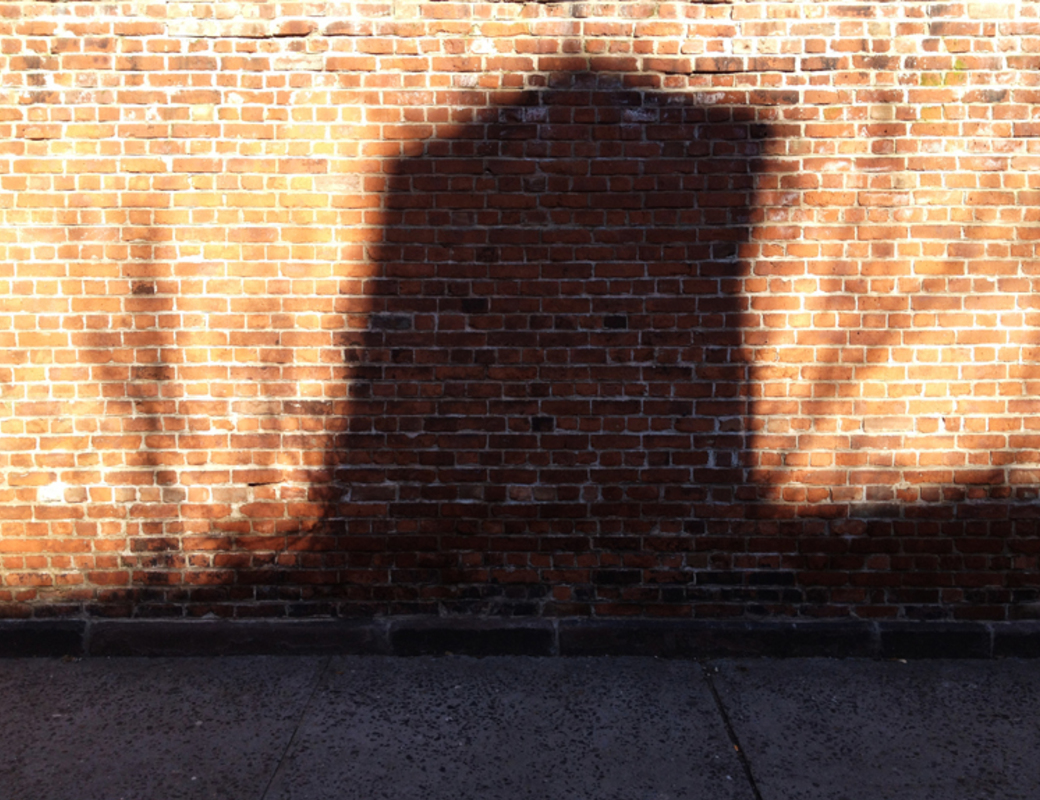
My favorite wall in New York. The wall outside St Patrick’s old cathedral on Mulberry Street in Manhattan. It changes with the light, so beautiful. It was also in the movie “The Pope Of Greenwich Village” and that’s just plain cool.
Address
My Favorite Wall, 260 Mulberry Street, New York, United States
Current city: New York
Aaron Graubart is an award winning still life and food photographer based in New York City. Born and raised in London, Aaron studied painting at the Sir John Cass School of Art and later photography at the London College of Communication. He has been creating beautiful, graphic, powerful images for advertising and editorial clients for more than a decade. A passion for the history and language of painting often informs and influences his work, however a love for all things contemporary, graphic, powerful and photographic keeps his work firmly rooted in the present. Aaron lives in Brooklyn with his 14 guitars, two blue bicycles and his beloved 1972 Triumph Bonneville.
 

More Places in New York 452

Authentic Tibetan and Nepalese cuisine. Excellent noodles. Family owned.
Read More
I live above TriBeCa and take walks into and around this area often. It's quiet, usually on the emptier side, and hosts a few gems of restaurants including Tiny's, Takahachi, and Odeon - all on the same block of West Broadway.
Read More
After the full moon, when the tide is the lowest, you'll find a century of fossils from a gone NY, trails of washed-out rainbow colored bottles, a graffitied shipwreck buried by time. Hundreds of years of history written in the sand.
Read More
One of my favorite shops in NY, very well curated…  clothes, furniture, ceramics, great things.  Constantly showing new pieces.
Read More
In 1963, the Italian-born sculptor Costantino Nivola filled a playground that covers an entire city block with avant-garde abstractions. In the middle of an Upper Manhattan housing project, there are cuboid cutouts sculpted in cement, a fountain made with two diamond-shaped boulders, concrete play horses, and a sand-casted relief carved high into a wall. In the northeast corner, a matriarchal figure known as “The Nanny” rises from the ground. The artist’s sculptures were built in an era when urban development incorporated art in its effort to uplift communities and express democratic ideals. “A work designed for a public space is less a work of art than a civic act,” Nivola once said. “It concerns the ways in which we live together, and in which we influence each other.”
Read More
Argentina
Austria
Bosnia and Herzegovina
Colombia
Croatia
Czechia
Ecuador
Finland
Georgia
Hong Kong
Iceland
Indonesia
Ireland
Israel
Latvia
Lithuania
Malta
Morocco
New Zealand
Oman
Pakistan
Panama
Philippines
Portugal
Puerto Rico
Romania
Serbia
Singapore
Slovenia
South Africa
South Korea
Sri Lanka
Taiwan
Thailand
Ukraine
United Arab Emirates
Uruguay