Amsterdam is at it’s best when it is covered in a thick layer fresh fallen snow, I like to go out at night and wander through one of the parks, to experience this beautiful metamorphosis of a city landscape.
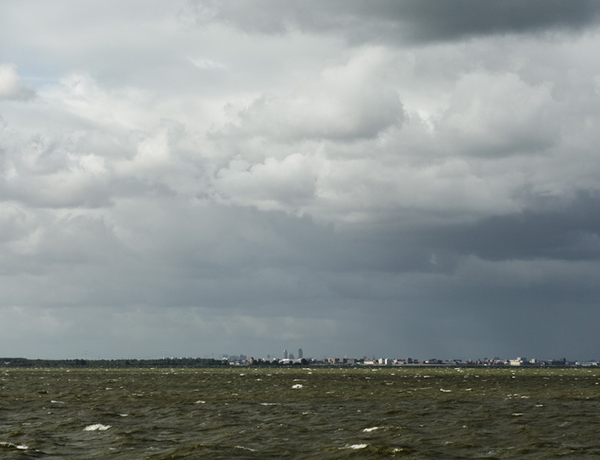
The Oostvaardersdijk is huge dike that protect the polder of Flevoland from being flooded. It's near the city of Almere that was founded in 1975 on the just recovered land of the Flevopolder. It is a great place to see the skyline of Amsterdam and look out over the Markermeer, the former Zuiderzee. When you turn around you can look down in the polder on an impressive group of modern windmills, in the distance you see the city of Almere. This is Holland at it's core: endless flats with the endless skies you know from Seventeenth century painting. You can drive the Oostvaardersdijk north to Lelystad and cross the lake to Enkhuizen and back to Amsterdam. On the way you drive past Oostvaardersplassen nature reserve, a large area of marshes and wild land in the Flevopolder, where they introduced wild horses and prehistoric cattle.
The fence around De Nederlandsche Bank on the Frederiksplein is a true optical experience. While passing the building, a rhythmic, dynamic pattern appears and disappears in the trellis of the fence. The figures on the sides of the rails were designed in 1992 by artist Peter Struycken, a pioneer in the area of environmental art and generating computer-program based image, light and colour compositions.
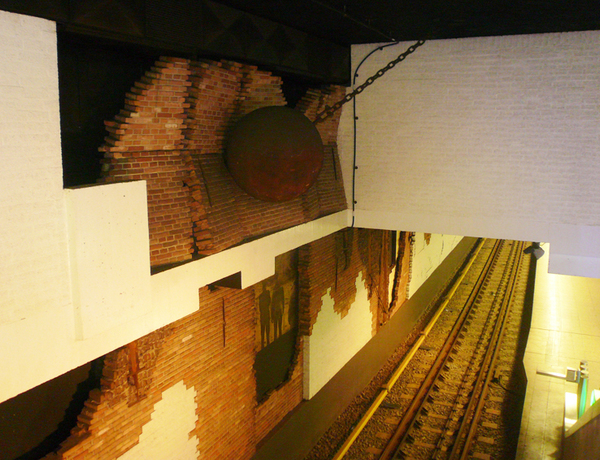
Under the city, the extraordinary Gesamtkunstwerk by Louis van Gasteren, Jan Sierhuis and others is located in Nieuwmarkt underground. This is one of the public artworks of the Seventies and early Eighties endangered due to station renovation on the Underground Eastline. At present there is a notice hanging at different spots on the wall: ‘‘This artwork has been temporally removed due to renovations”.