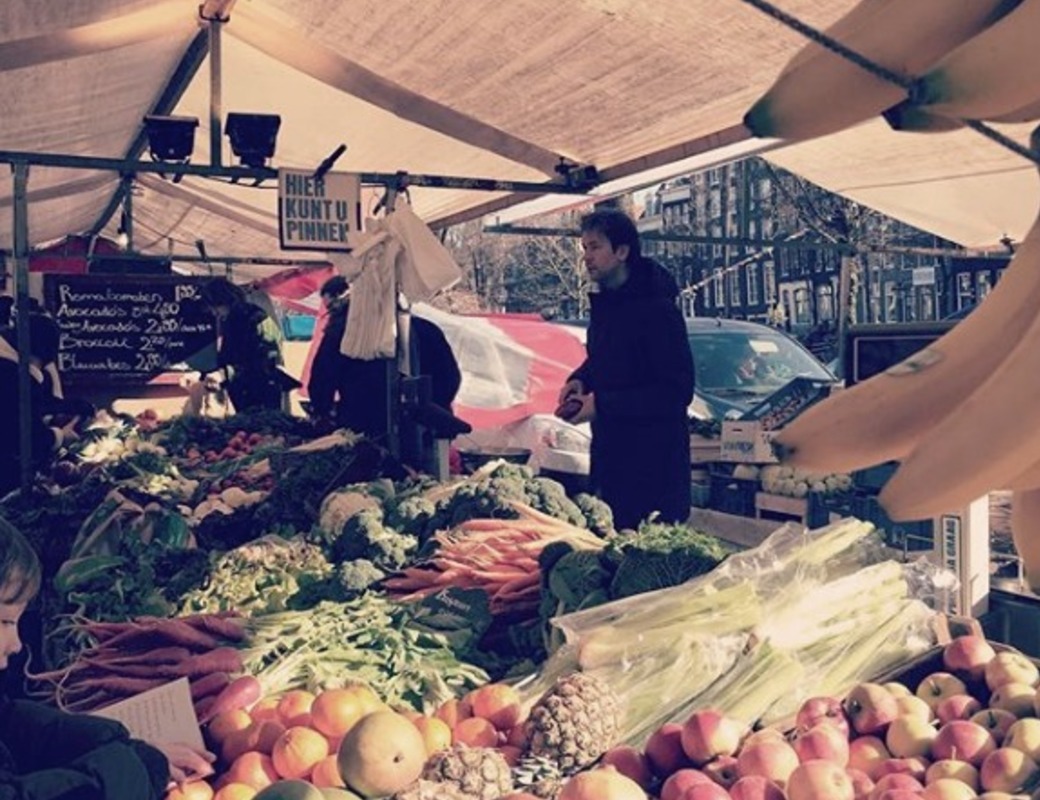
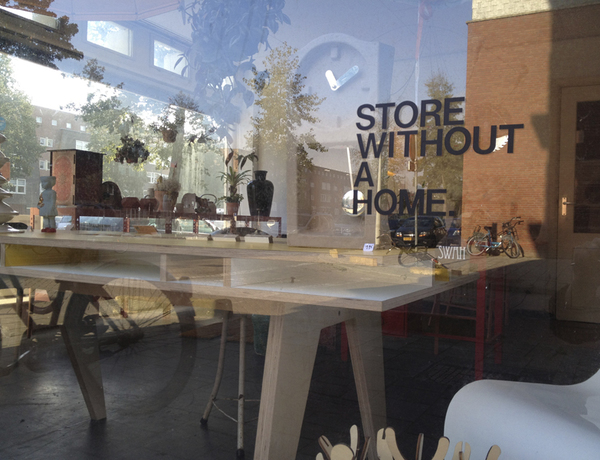
Open Monday mornings and Saturdays all day, there’s always something to find at this market. Lots of vintage items, the most gorgeous florals, and fresh food for making an amazing dinner that night.
The portal between the Leidseplein nightlife area and the Max Eeuweplein is pompously accentuated by a classical looking façade, designed in 1991 by Zaanen Spanjers Architects. On the frieze, supported by columns, the architect has carved an inscription: ‘Homo sapiens non urinat in ventum’ - ‘A wise man does not piss into the wind’. A ‘wisecrack’, disguised in Latin.
Smack in the middle of tourist district and right on the border of the red light district. My good friend (and super talented photographer Qiu Yang, check it out folks!) is part of the furniture there and because of him, we - his friends - are allowed to order outside of the menu. So none of that westernized mild gruel, but the real spicy tongue-numbing-deal. Before going out to parties, after gallery openings or just when we’re hungry, our bunch always gathers there. Good times!
It's a very small museum in the Hermitage about art made by outsiders. It's also known as 'Art Brut', a name given to it in 1972 by French artist Jean Dubuffet. It simply means that it is art made by people that don't fit in the normal life structure that humans suppose to have. Which can mean that the art is made by people who are in jail, who are ill, have a mental dissability or another way of not fitting into the community. The exhibitions are quite small, so it takes you just around an hour. And the hermitage has a nice canal view.
Almost every underground station in Amsterdam has a fascinating story behind it. My favourite one is metro station ‘Weesperplein,’ because it has a hidden station underneath the actual station that was meant for the 'Singellijn.' However, that line was never build and the second station remained useless. Besides that the hidden station was also equipped to serve as a shelter during the cold war. The large doors that were meant to hermetically close the building are still visible at both ends of the platform. Other small details, like the panels in the ceiling than can be used as tables when turned around, are also silent references to the building’s former use.