The Oostvaardersdijk is huge dike that protect the polder of Flevoland from being flooded. It's near the city of Almere that was founded in 1975 on the just recovered land of the Flevopolder. It is a great place to see the skyline of Amsterdam and look out over the Markermeer, the former Zuiderzee. When you turn around you can look down in the polder on an impressive group of modern windmills, in the distance you see the city of Almere. This is Holland at it's core: endless flats with the endless skies you know from Seventeenth century painting. You can drive the Oostvaardersdijk north to Lelystad and cross the lake to Enkhuizen and back to Amsterdam. On the way you drive past Oostvaardersplassen nature reserve, a large area of marshes and wild land in the Flevopolder, where they introduced wild horses and prehistoric cattle.
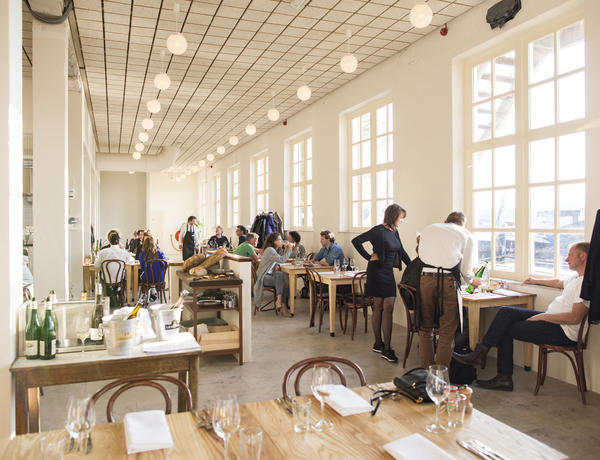
De Waaghals (= The Dare-devil) is a very nice vegetarian restaurant. The atmosphere is informal, but the food is very nice, refined and creative. Organic ingredients are used as much as possible. Each month a dish focuses on a different country.
Gorgeous cinema near the Rembrandtsplein. Built in the early 1920s in a very rich architectural style that mixes Jugendstil, the Amsterdam School and Art Deco, the cinema was meant to be a temple for cinematography. The entrance and the main auditorium (Zaal 1) are just simply stunning. It’s been recently restored in its former splendor and is now owned by big distributor Pathé Cinemas. Though a lot of people have been criticizing the fact that a beautiful cinema as this is now exploited by a big commercial chain, I sort of like that fact that also the big blockbusters are usually screened here. It feels like the old days where I imagine you’d simply get overwhelmed by the place and the film and its technique. So my advice is: whatever (crap) plays in Zaal 1, just buy a bag of popcorn, sit back and enjoy.
It's a very small museum in the Hermitage about art made by outsiders. It's also known as 'Art Brut', a name given to it in 1972 by French artist Jean Dubuffet. It simply means that it is art made by people that don't fit in the normal life structure that humans suppose to have. Which can mean that the art is made by people who are in jail, who are ill, have a mental dissability or another way of not fitting into the community. The exhibitions are quite small, so it takes you just around an hour. And the hermitage has a nice canal view.
The Amstel river is the main river of Amsterdam. Around 1200 they build a dam in the river and that was the birth of Amsterdam (or Amstelredamme as it was called back then). This dam is now situated under the Dam square, the central square of the city. If you bike from the old city center to the south along the banks of the Amstel, as I do every day on my way to my studio, the city opens up and gives way to a lot of space. If you follow the river it will take you out of town more quickly then you'd expect since it is surrounded by a green corridor that get's larger and greener as you exit the city. In less then half an hour bike trip from the old city you can find yourself in juicy green pastures between grazing cows and sheep. Only the airplanes heading in and out of Schiphol Airport will remind you that the city is near.