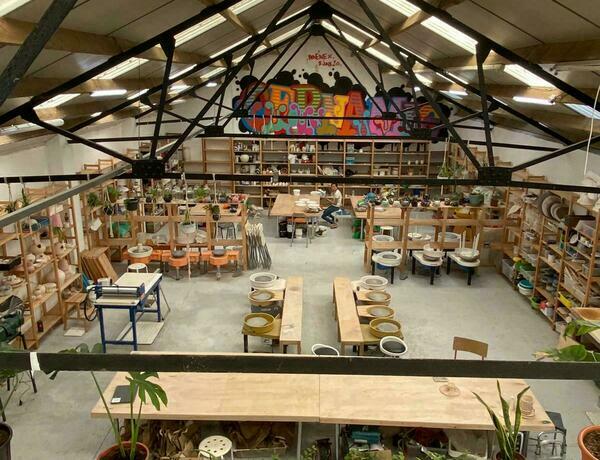
The Lambeth Walk is not as billed in the song. Quite a bleak but somehow beautiful mishmash of architectural accident–or–design; a legacy of stray WWII bombs intended for more auspicious near-at-hand targets, such as the Houses of Parliament. I study sculpture here each Monday; a lovely workshop inside. The exterior features one of only a few examples of an outside pulpit, apparently for the minister to take his message direct to the shoppers, in the Walk's heyday.
Although freedom of speech is a human right in most civilised countries, Speakers’ Corner has been described as one of the few places in the world where anyone can just climb on a ‘soapbox’ and speak their minds on any subject as long as the police considers it lawful – and almost be guaranteed an audience.
It has been like this ever since this area of London’s Hyde Park was the site of Tyburn gallows, where public executions took place between 1196 and 1783, and the condemned were allowed to speak before being hanged.
Over the centuries, Speakers’ Corner has been the site of riots, demonstrations, public meetings of groups – such as the communists – that weren’t allowed to gather anywhere else, and was frequented by Marx, Lenin, George Orwell and many other historic figures.
While today it is mainly the scene of eccentrics, religious fanatics and oddballs of all kinds, several prominent speakers such as Heiko Khoo and Jonathan Fitter keep the tradition of meaningful discussions around political and social themes alive.
Religion has been debated in Hyde Park since the right to meet and speak freely was formally established in 1872. Today it’s the dominant topic by far, with religious speakers and preachers drawing the biggest crowds and clearly outnumbering the political meetings.
I have been documenting the people gathering here every Sunday since 2012.
Being an East London boy at heart I am partial to an occasional fix of café culture. Pellici's has been running since the start of the last century, to which me, my father and my father's fathers have all enjoyed its mix of tasty Italian/London grub and energetic atmosphere. If you're visiting, make sure you drop by, as it will provide a valuable, forever-depleting education into what East London is really all about.
The Barbican is worth visiting for it's brutalist architecture alone. The concert programming is really diverse; it's home to the BBC Syphony Orchestra, but you'll also find bands like the Dirty Projectors and the National amongst the classical and contemporary composer line up. Plenty of art, dance and theatre too, however, the Conservatory is the real gem that's not to be missed.