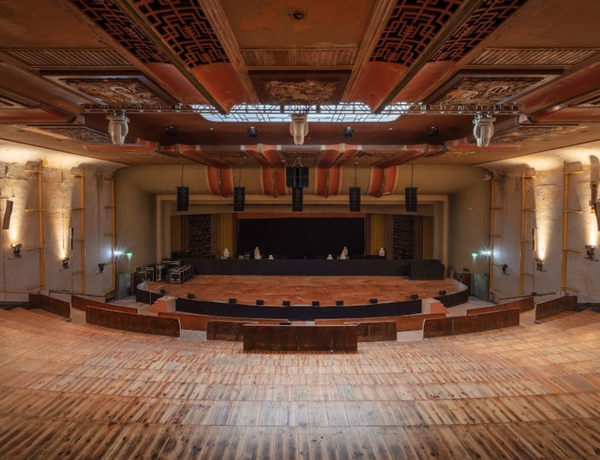
Barbican, a residential estate in central London, is known for its brutalist architecture, almost a social experiment on how to live in an estate. I love walking around this area looking at the geometric shapes, the contrasting public spaces and the use of materials. The term brutalist originates from the fresh word for ‘raw’, and concrete is typically used as one of the main materials.The Barbican centre located in the centre is an arts centre and the largest of its kind in Europe, and was opened in 1982. The centre is used for classic and contemporary concerts, teatre, film screenings and art exhibitions, and houses a library, restaurants, cafes and bars. The areas’ architecture really invites you to go on a photo safari as there are great angles and light everywhere.
As preposterous as this sounds I think there are few ills that can’t be cured by sitting lazily on a stack of rugs in Liberty and allowing the patterns to wash over you in a warm, and slightly itchy, haze. If you don’t believe me try it. The second you step off the main shopping area the sound and lights dim, the rugs beg to be touched, and all your worries seem to disappear.
Ever since visiting the exhibition space, a few years ago, I don’t think I have ever missed one single show. It is one of the best exhibition spaces for contemporary art in London, in my opinion. The scale and the light feel right. The environment is not too overwhelming and not too small. In addition, the bookshop has a good selection of catalogues, art books and magazines.