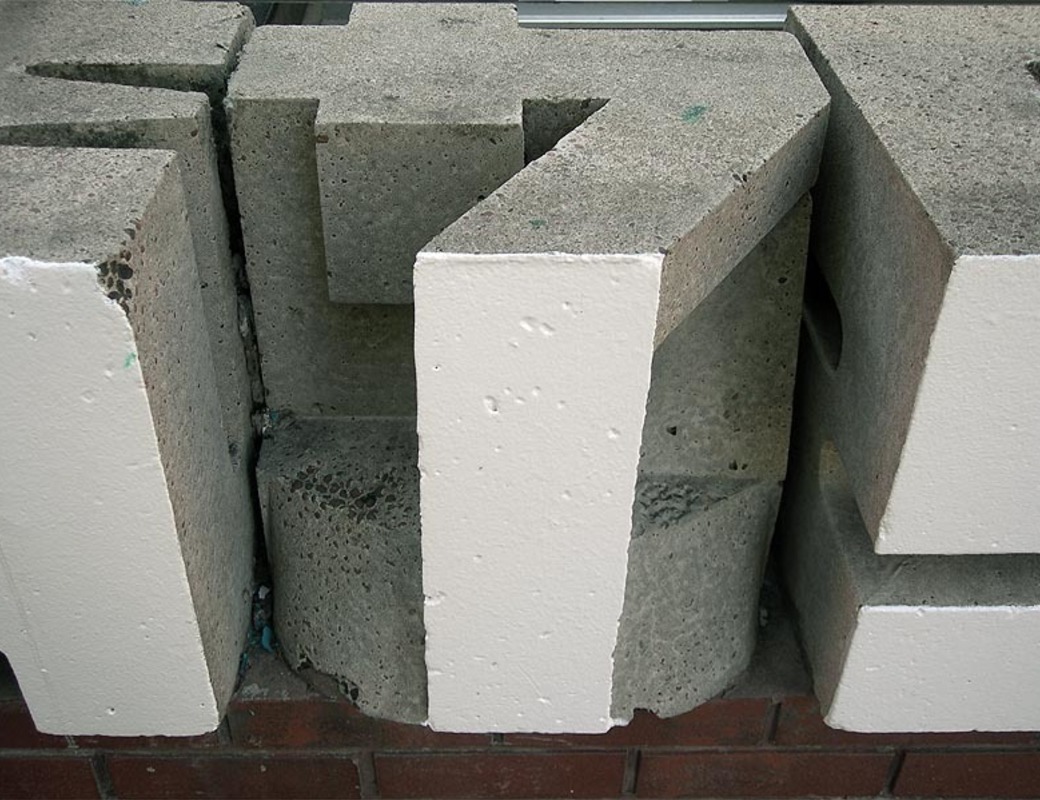
I walk a lot; the best way to experience a city. So it’s sometimes to do with the way places join up. This cast concrete letterform is a part of the Lycée’s gateway. Each of the form’s facets arrives at a different character, so six possible letters come from each cast object. I’ve never been inside the Lycée but always walked through this way up to the V&A, in order to examine again and again how each form works. The surfaces set the tone for the V&A and its incredible Ceramics floor, a perennial inspiration.
Website
vam.ac.uk
Address
ycée Français Charles De Gaulle / V&A Ceramics Display, Cromwell Road, London, United Kingdom
Current city: London
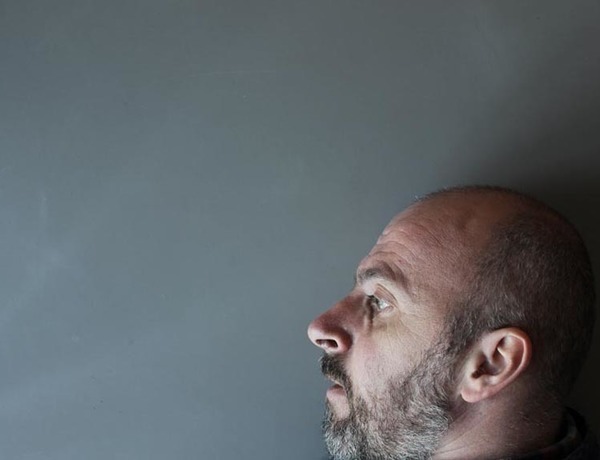
Peter Nencini came to London in 1992, to study at the Royal College of Art. Aside from a three-year interlude working in Brussels, he stayed put. A designer and educator, he has worked across print and television for clients such as the New York Times and the BBC. More recently, he has gravitated towards editioned and exhibited work in ceramic, fabric, wood and metal — with a bonding interest in the space between typographic and figurative form. An interview about his work, with Ryan G. Nelson for the Walker Art Center, can be read here. His editioned box and wall works are currently showing at Partners & Spade, New York.
 

More Places in London 471

Good, progressive, solid, forward-thinking place. And run by the warmest, most intelligent and inspiring people to be around. Always a humble, fulfilled visit. And whilst in the area, best to visit next door to Hannah Barry's gallery for more wonderful work.
Read More
No better breakfast in London, luckily just five minutes from my office.
Read More
Everyone who works at Daunt Books seems to have the answer to any question you might have, watching my large dog carefully navigate their narrow aisles is always fun too.
Read More
The Lambeth Walk is not as billed in the song. Quite a bleak but somehow beautiful mishmash of architectural accident–or–design; a legacy of stray WWII bombs intended for more auspicious near-at-hand targets, such as the Houses of Parliament. I study sculpture here each Monday; a lovely workshop inside. The exterior features one of only a few examples of an outside pulpit, apparently for the minister to take his message direct to the shoppers, in the Walk's heyday.
Read More
Although freedom of speech is a human right in most civilised countries, Speakers’ Corner has been described as one of the few places in the world where anyone can just climb on a ‘soapbox’ and speak their minds on any subject as long as the police considers it lawful – and almost be guaranteed an audience. It has been like this ever since this area of London’s Hyde Park was the site of Tyburn gallows, where public executions took place between 1196 and 1783, and the condemned were allowed to speak before being hanged. Over the centuries, Speakers’ Corner has been the site of riots, demonstrations, public meetings of groups – such as the communists – that weren’t allowed to gather anywhere else, and was frequented by Marx, Lenin, George Orwell and many other historic figures.  While today it is mainly the scene of eccentrics, religious fanatics and oddballs of all kinds, several prominent speakers such as Heiko Khoo and Jonathan Fitter keep the tradition of meaningful discussions around political and social themes alive. Religion has been debated in Hyde Park since the right to meet and speak freely was formally established in 1872. Today it’s the dominant topic by far, with religious speakers and preachers drawing the biggest crowds and clearly outnumbering the political meetings.  I have been documenting the people gathering here every Sunday since 2012.
Read More
Argentina
Austria
Bosnia and Herzegovina
Colombia
Croatia
Czechia
Ecuador
Finland
Georgia
Hong Kong
Iceland
Indonesia
Ireland
Israel
Latvia
Lithuania
Malta
Morocco
New Zealand
Oman
Pakistan
Panama
Philippines
Portugal
Puerto Rico
Romania
Serbia
Singapore
Slovenia
South Africa
South Korea
Sri Lanka
Taiwan
Thailand
Ukraine
United Arab Emirates
Uruguay