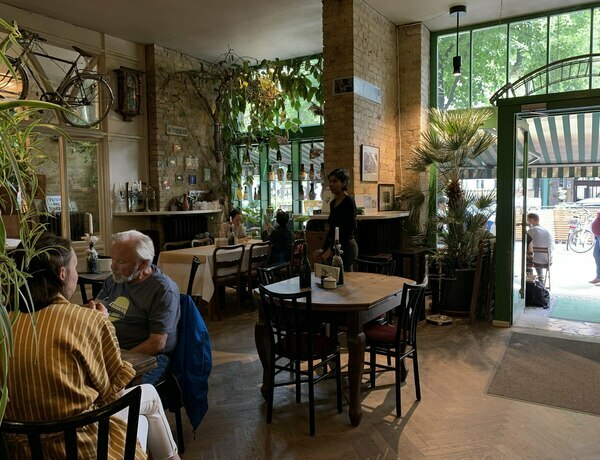
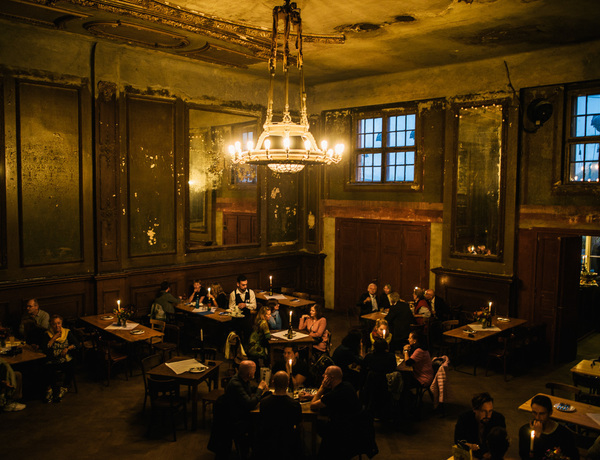
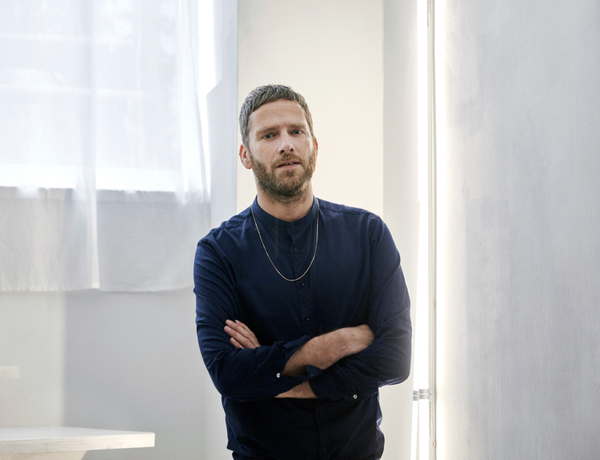
Situated in the patio of the Kunst-Werke, a well established exhibition house for contemporary art, this cafe features mirror-walls and a selection of nice cakes and lunch menu.
Everyone knows Berlin is a mega party city, but it is not a generic type of party that is easily found in other cities. Berlin attracts a number or eccentric weirdos, and it is great to go people watching at nearly any venue within the city. This specific image reveals a dance party, featuring American Bounce musician Katey Red and her crew performing at Sudblock.
I never heard about Havel until some friends and me checked out the google earth for a trip at the weekend. We went there in the german winter, oh yes...in the winter. I loved this place because is a small city island with a lake (which was frozen at that time) and with lovely houses and an old mill. I have never been there in the summer but i can imagine how wonderful would be.
What’s not to like about The Sammlung Boros Collection? It’s a brilliant private collection of contemporary art held captive in a monstrous, symmetrical ex-Nazi bunker with two metre thick concrete walls, dominating an area of a thousand metres squared. It also doubled as a hardcore techno and fetish club in the ‘90s, of which traces linger in every corner.
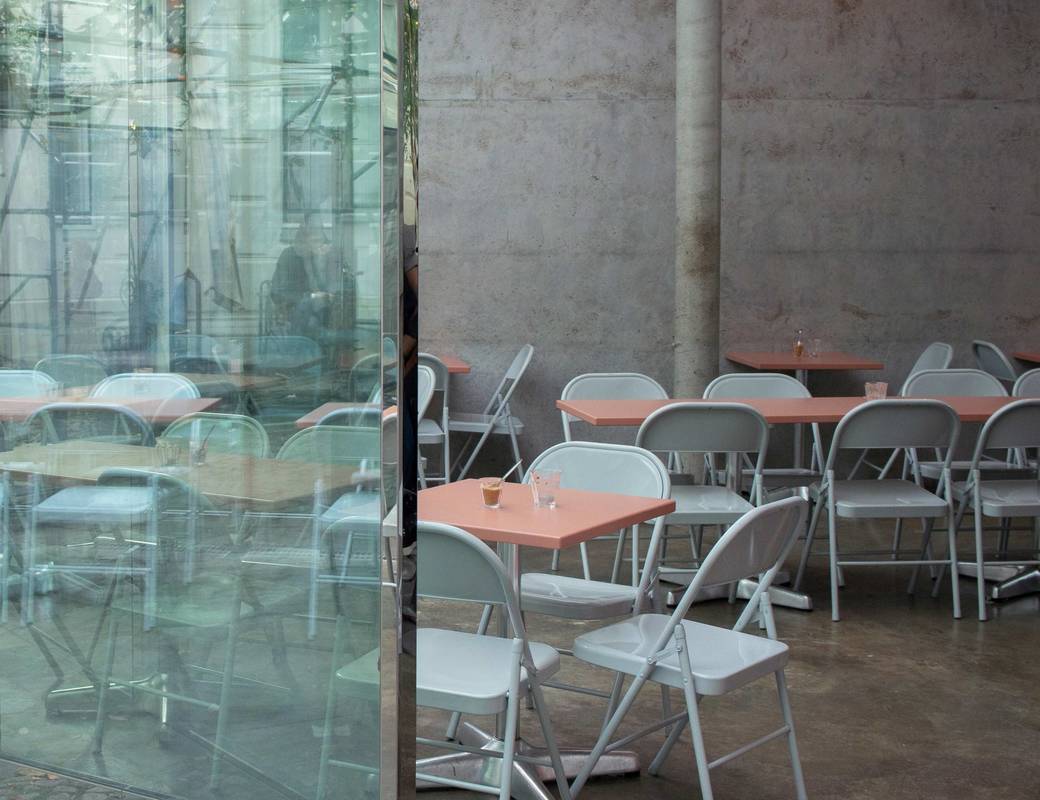
Cemetery of the Dreifaltigkeitsgemeinde (Dreifaltigkeitsfriedhof) in Kreuzburg on Mehringdamm 22, between Zossener Strasse and Blücherstrasse. The grandson of German-Jewish philosopher Moses Mendelssohn, is musician Jakob Ludwig Felix Mendelssohn who was born in Hamburg and lived in Berlin from age two. Felix Mendelssohn and his family are buried in the middle of Kreuzburg at the Cemetery of the Dreifaltigkeitsgemeinde. Today it is administered together with its 5 neighbouring Protestant cemeteries by the cemetery administration St. Jacobi number I.
The is an old geisterbahnhof, or railway station, in the Prenzlauer Berg district of Berlin, Germany. It is served by the Berlin S-Bahn and the M13 line of the Berlin Straßenbahn. The station opened on October 1, 1935, at the junction of the Nordbahn line from Berlin to Stralsund with the railway line to Szczecin where the eponymous street named after Bornholm Island crossed the tracks. As Bornholmer Straße station lay right at the Berlin Wall it was closed on August 13, 1961, turning it into one of Berlin's ghost stations, passed by eastern and western S-Bahn trains without stopping. After German reunification Bornholmer Straße was reopened on December 22, 1990. Today, you can still go there to see remnants of the wall, and where people flooded in when the wall came down in 1989. (In the evening of November 9, 1989, thousands of East Berliners and GDR citizens assembled at the bridge demanding entry to West Berlin. At 9.20 p.m. local guards were the first to open the checkpoint and allow people passing through freely to West Berlin, where they were greeted enthusiastically. The event marked the commencement of the fall of the Berlin Wall.).