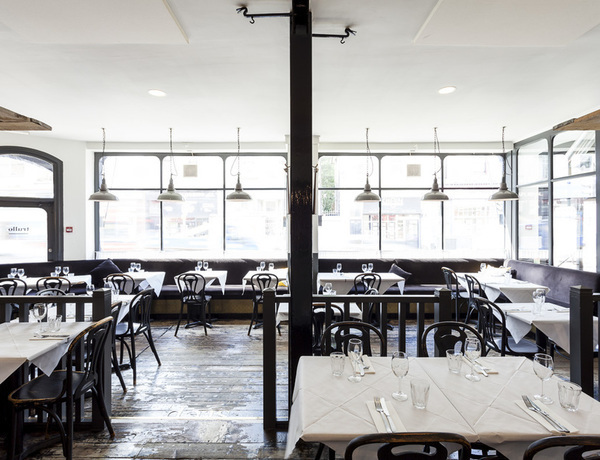
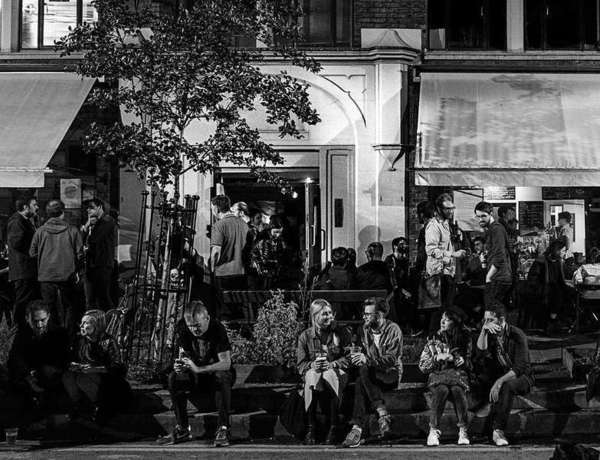
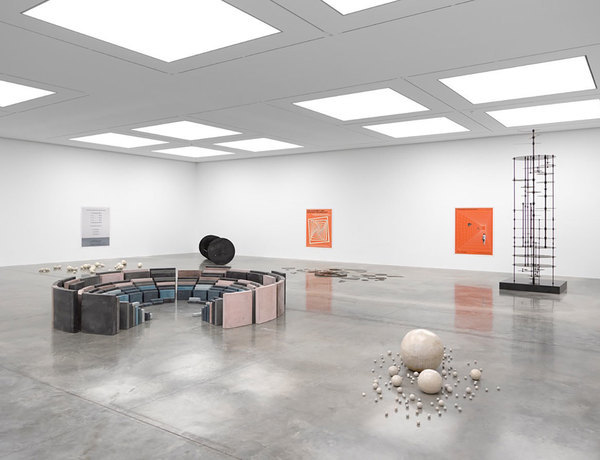
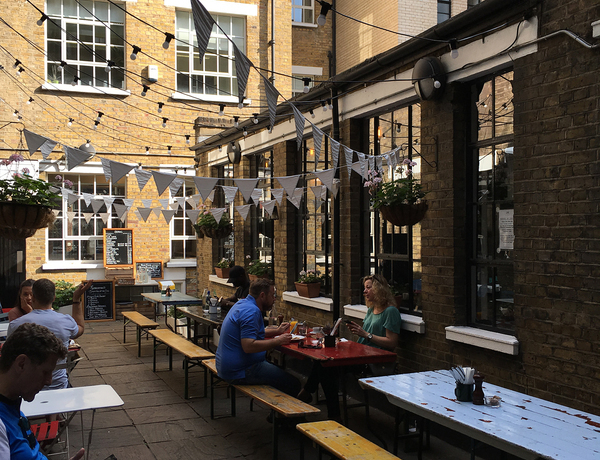
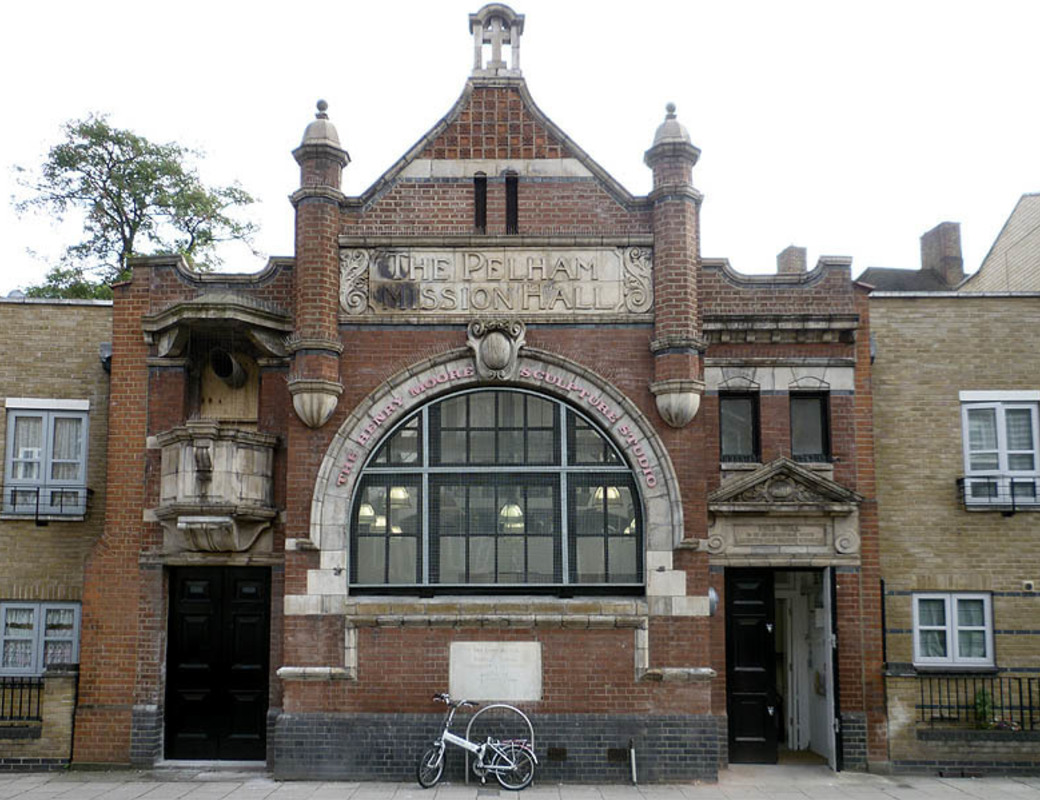
The Lambeth Walk is not as billed in the song. Quite a bleak but somehow beautiful mishmash of architectural accident–or–design; a legacy of stray WWII bombs intended for more auspicious near-at-hand targets, such as the Houses of Parliament. I study sculpture here each Monday; a lovely workshop inside. The exterior features one of only a few examples of an outside pulpit, apparently for the minister to take his message direct to the shoppers, in the Walk’s heyday.

Address
The Lambeth Walk, 27 Lambeth Walk, London, United Kingdom
Current city: London
Peter Nencini came to London in 1992, to study at the Royal College of Art. Aside from a three-year interlude working in Brussels, he stayed put. A designer and educator, he has worked across print and television for clients such as the New York Times and the BBC. More recently, he has gravitated towards editioned and exhibited work in ceramic, fabric, wood and metal — with a bonding interest in the space between typographic and figurative form. An interview about his work, with Ryan G. Nelson for the Walker Art Center, can be read here. His editioned box and wall works are currently showing at Partners & Spade, New York.
 

More Places in London 471

A winding side street that links hectic Oxford Street and Tottenham Court Road, Hanway Street, with its odd mix of old-style Spanish flamenco bars and second-hand vinyl stores, is a bit of an anomaly. I’ll be surprised if they all withstand the Tottenham Court Road redevelopment but I hope they do.
Read More
One of my top three Wetherspoons.
Read More
This beautiful 19thC industrial building is situated in Markfield Park just around the corner from my studio. Once a sewage treatment works serving the whole of Tottenham and now a museum. The fully restored Victorian pump engine is only open to the public on the second Sunday of every month but the outside of the building and surrounding park is a worth a visit regardless.
Read More
One of my favourite things about London is the underground transport system itself. I love the design of the information systems and the stations have so much history — some of them dating right back to the 1800s.
Read More
Argentina
Austria
Bosnia and Herzegovina
Colombia
Croatia
Czechia
Ecuador
Finland
Georgia
Hong Kong
Iceland
Indonesia
Ireland
Israel
Latvia
Lithuania
Malta
Morocco
New Zealand
Oman
Pakistan
Panama
Philippines
Portugal
Puerto Rico
Romania
Serbia
Singapore
Slovenia
South Africa
South Korea
Sri Lanka
Taiwan
Thailand
Ukraine
United Arab Emirates
Uruguay