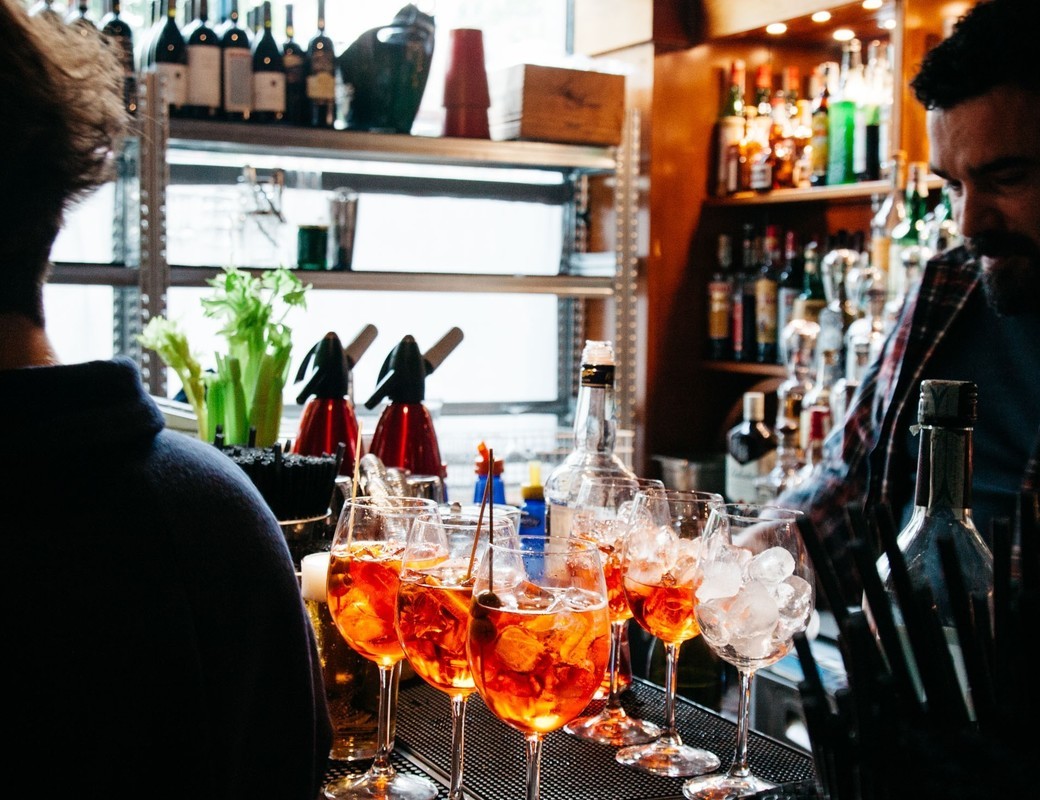

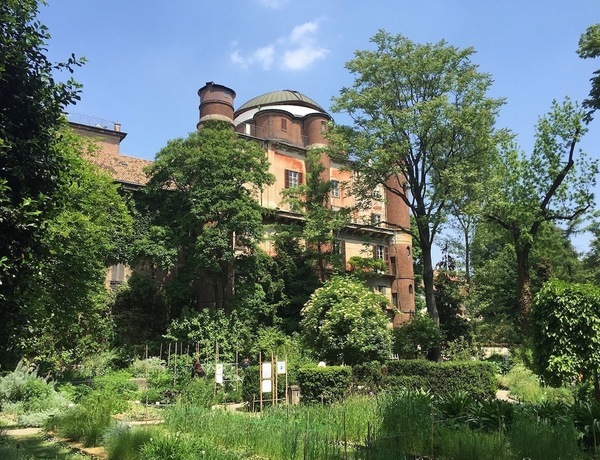
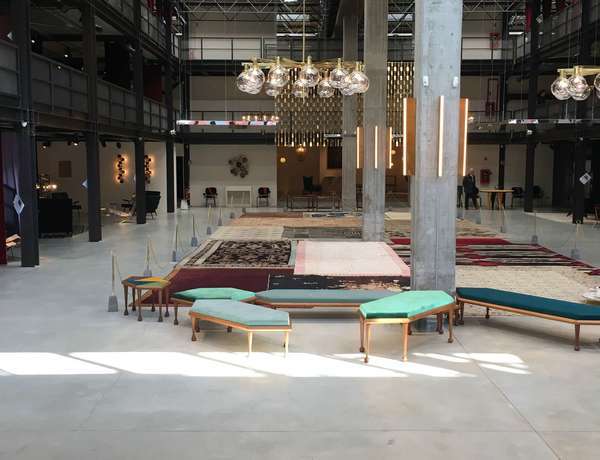
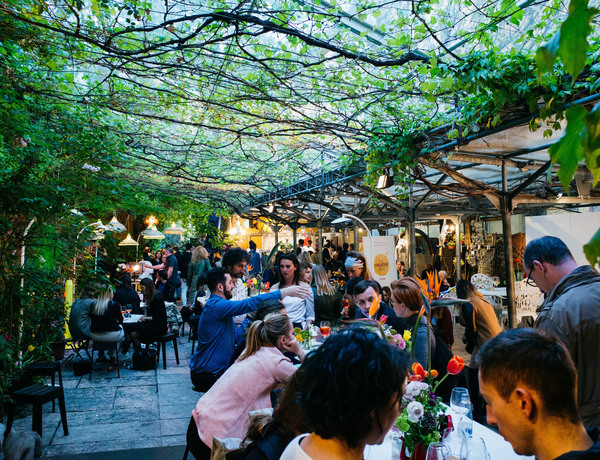
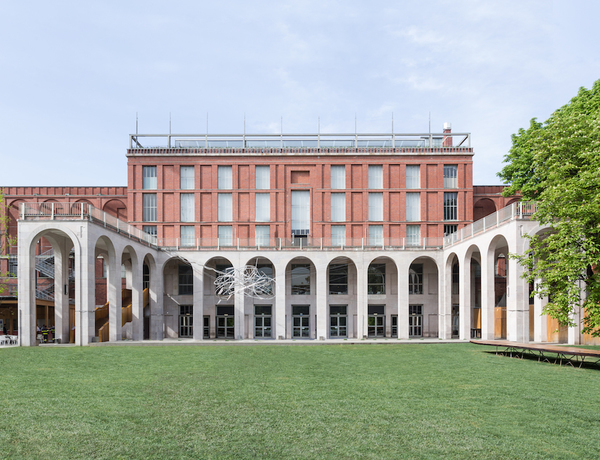
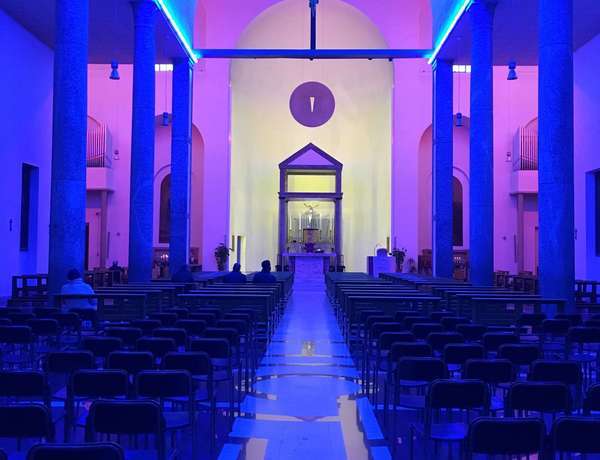
The perfect place for ‘aperitivo’. Open until late.
Website
facebook.com
Address
Mom Cafè, 51 Viale Monte Nero, Milan, Italy
Current city: London
Other cities: MilanVenice
After years of casually being Ask The Hoff to friends and friends of friends I decided to share my knowledge and discoveries of London and beyond. 
 

More Places in Milan 60

Massimo De Carlo gallery was founded in Milano in 1987. Since the beginning Massimo De Carlo gallery program included young and prominent artists such as, among others, Alighiero Boetti, Rudolf Stingel, Maurizio Cattelan, and Yan Pei-Ming. The global affirmation of these and the other artists of the gallery has favoured its on-going success. For 30 years Massimo De Carlo has been playing a fundamental role in bringing the most interesting voices of international art to the Italian scene, and Italian artists into the global arena. This contributed to the promotion and establishment of a vital dialogue between the artists and national and international institutions, encouraging relationships between galleries, critics, curators, and collectors. Throughout the years, the gallery’s artists have been shown in international museums and biennials, and thus obtained an outstanding place into important public and private art collections. Since 2019 Galleria Massimo De Carlo's new headquarters are located at Casa Corbellini-Wassermann, situated in Viale Lombardia 17, which was built in the early 1930s (1934-1936) by the renowned Italian architect Piero Portaluppi.
Read More
The Brera Gallery was officially established in 1809, even though a first heterogeneous collection with educational purpose existed already from 1776 – and then increased in the following years – alongside the Accademia di Belle Arti, requested by Mary Therese of Austria to offer the students the opportunity to study lofty masterpieces of art close up. Brera become a museum to host the most important works of art from all of the areas conquered by the French armies. So unlike other important museums in Italy such as the Uffizi, Brera did not start out life as the private collection of a prince or nobleman but as the product of a deliberate policy decision. Paintings confiscated from churches and convents throughout Lombardy with the religious orders’ dissolution began to pour into the museum in the early years of the 19th century, soon to be joined by artworks of similar provenance from other areas of the Kingdom of Italy. This explains why the collection comprises chiefly religious works, many of them large altarpieces, and accounts for Brera’s special aura on which later acquisitions have had only a minor impact.
Read More
Vintage lovers! The Planetarium of Milan, Civico Planetario "Ulrico Hoepli", is a building located at the entrance of Giardini di Porta Venezia. It's a beautiful structure designed by Piero Portaluppi and commissioned by the Italian-Swiss publisher Ulrico Hoepli. Also the interior design is beautiful, there you can find a planetarium which projects and represents the image of the stars and their movements in the sky. The Planetarium also has a library which is a section of the Museum of Natural History, near by. They also organize educational activity concerning astronomy as talks, events and even concerts. 
Read More
Where to find the best vintage treasures in Venice!
Read More
Pirelli HangarBicocca is a non-profit foundation, established in 2004, which has converted a former industrial plant in Milan into an institution for producing and promoting contemporary art. This dynamic center for experimentation and discovery covers 15,000 square meters, making it one of the largest contiguous exhibition spaces in Europe. It presents major solo shows every year by Italian and international artists, with each project conceived to work in close relation to the architecture of the complex, and explored in depth through a calendar of parallel events. Admission to the space and the shows is completely free of charge, and facilitators are on hand to help the public connect with the art. Since 2013, Vicente Todolí has been the foundation’s Artistic Director. The complex, which once housed a locomotive factory, includes an area for public services and educational activities, and three exhibition spaces whose original twentieth-century architectural features have been left clearly visible: Shed, Navate, and Cubo. As well as its exhibitions program and cultural events, Pirelli HangarBicocca also permanently houses one of Anselm Kiefer’s most important site-specific works, The Seven Heavenly Palaces 2004-2015, commissioned for the opening of Pirelli HangarBicocca. The history of Pirelli HangarBicocca is closely linked to that of Breda, a company incorporated in 1886 by Ingegner Ernesto Breda, who moved it to the Bicocca district from 1903. Pirelli, Falck and Marelli followed suit with their own companies, thus turning the area into one of the most important industrial centres in Italy. In the new 200,000m² factory, Breda mainly manufactured railway carriages, electric and steam locomotives, boilers, farm machinery and equipment and, during the First World War, aeroplanes, projectiles and other products for the war effort. One of these factory buildings was Pirelli HangarBicocca, which at the time was divided into blocks of different types, origin and size. The “Shed“, for example, a typical low bare-brick factory building with double-pitched roof and large skylights, is already quite recognisable in photos dating from the first half of the 1920s. It was here that components for locomotives and farm machinery were manufactured. In 1955 Breda Elettromeccanica e Locomotive enlarged its premises with the addition of a cubic barrel-vaulted building which is now the Cubo exhibition space of Pirelli HangarBicocca. The huge building that joins the Shed and the Cubo, which is today called “Le Navate”, was constructed between 1963 and 1965 for the transformers department. It was here that high-powered machines were assembled and tested. The building, which has retained its original dimensions – 9500 m² with a height of about 30 metres – consists of a “nave” and two aisles. Since 2004, one of these has been home to The Seven Heavenly Palaces by the German artist Anselm Kiefer. Storage facilities and sheds were demolished in about 2000 to create the garden where Fausto Melotti’s La Sequenza has been since 2010. In the early 1980s, Breda was taken over by the Ansaldo Group and, almost at the same time, the historic industrial areas gradually began to be decommissioned. The Bicocca district then underwent an almost total urban redevelopment. The Bicocca Project, which was launched in 1986, led to the creation of university buildings, administration centres and private housing around the Teatro degli Arcimboldi, as well as to the redevelopment of the old Pirelli factory buildings. After a decade of neglect, Pirelli HangarBicocca (formerly known as Ansaldo 17) was purchased by Prelios, the former Pirelli RE, which in 2004 decided to turn it into an exhibition space for contemporary art.
Read More
Argentina
Austria
Bosnia and Herzegovina
Colombia
Croatia
Czechia
Ecuador
Finland
Georgia
Hong Kong
Iceland
Indonesia
Ireland
Israel
Latvia
Lithuania
Malta
Morocco
New Zealand
Oman
Pakistan
Panama
Philippines
Portugal
Puerto Rico
Romania
Serbia
Singapore
Slovenia
South Africa
South Korea
Sri Lanka
Taiwan
Thailand
Ukraine
United Arab Emirates
Uruguay