I wish NYC produced more public projects like this. Chelsea is always worth a visit to check out the galleries. The highline is just another reason to make over to 10th ave. It is near our studio and a walk on the Highline always seems to clear any fog that might be gathering in your head. There are sections between buildings filled with trees. At night you can almost forget you are in the city. As an architect you can always find a detail or something that you would have done differently or that you think could have been better. The Highline is one of the few projects where everything just works perfectly how it is.
Most of the food here is meant to be eaten family-style with everyone sharing all the dishes on the table. Most of these dishes are best when accompanied by rice: Northern and Northeastern Thai dishes with sticky rice, Central and Southern Thai with jasmine rice. In Thailand, only a spoon and fork are used: the spoon to eat with and the fork to push food onto the spoon. We encourage you to try this method as it is the easiest way to eat many of these dishes. Some things are traditionally eaten with the hands such as grilled meat and sticky rice. Please ask your server for guidance if you wish. Chopsticks are normally used only when eating noodles, Vietnamese or Chinese food (they will be supplied if appropriate with a certain dish), however chopsticks are available upon request.
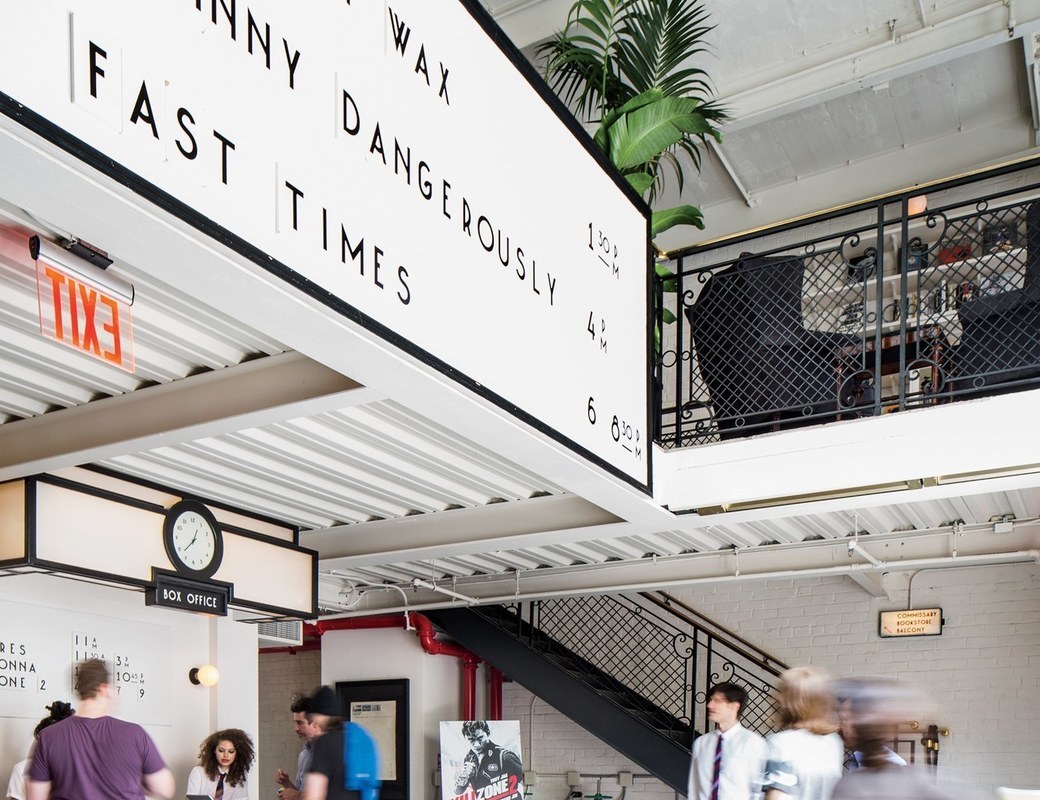
NeueHouse is the private workspace and cultural home for creators, innovators, and thought leaders. With iconic buildings, timeless design, thought-provoking cultural experiences and elevated hospitality, NeueHouse has reimagined the ideal environment for creative potential and progress.
In 1963, the Italian-born sculptor Costantino Nivola filled a playground that covers an entire city block with avant-garde abstractions. In the middle of an Upper Manhattan housing project, there are cuboid cutouts sculpted in cement, a fountain made with two diamond-shaped boulders, concrete play horses, and a sand-casted relief carved high into a wall. In the northeast corner, a matriarchal figure known as “The Nanny” rises from the ground.
The artist’s sculptures were built in an era when urban development incorporated art in its effort to uplift communities and express democratic ideals. “A work designed for a public space is less a work of art than a civic act,” Nivola once said. “It concerns the ways in which we live together, and in which we influence each other.”