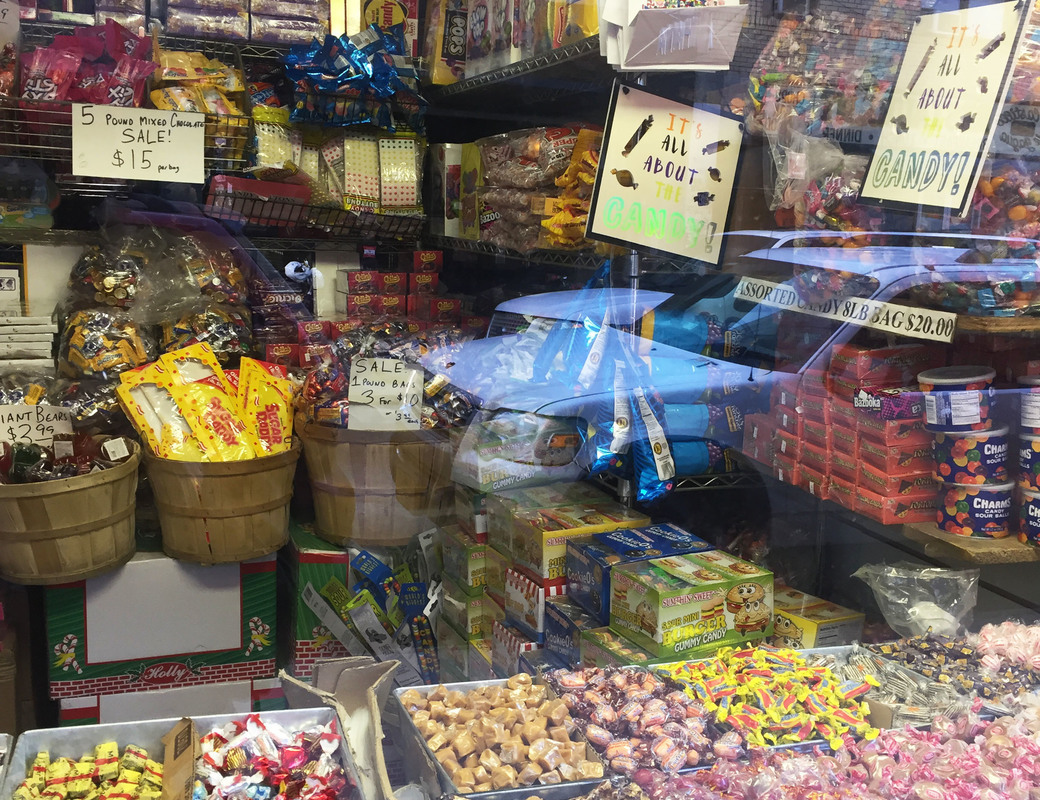
Economy Candy is an old-fashioned family owned candy store in the Lower east side. With glorious aisle after aisle of candy stocked as high as the eye can see including innumerable brands you never knew were still in production – its a treat for the eyes as well as the belly. Every time I get inside I’m looking for Willy Wonka.
Website
economycandy.com
Address
Economy Candy, 108 Rivington Street, New York, United States
Current city: Paris
Other cities: New York
Sarah Kahn is a french art director and designer based between Paris and New York. Her work mixes commissioned projects for a wide selection of clients in arts institutions, cultural events, brands and magazines. Inspired by the worlds of visual arts, sociology, innovation and kids universe she is constantly experimenting new perspectives and artistic collaborations.
 

More Places in New York 452

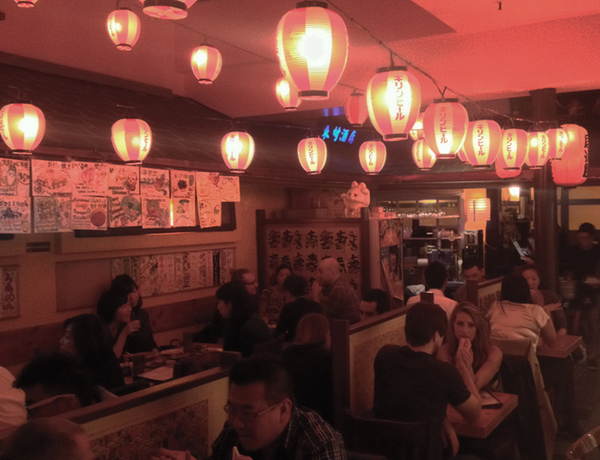
While the current trend in noodles may well be ramen, this bafflingly-named Japanese restaurant just ten minutes from my apartment specialises in udon. Unless you are my friend Diego Zambrano it will probably take you several visits to get through all the things you need to try on the menu - the gyoza are otherworldly, the sushi 'tacos' clever enough without being silly. New York has thousands of awful Japanese places; this is not one of them. It's super nice to come in on a Sunday night and eat at the bar next to curmudgeonly old guys barking at each other in Japanese.
Read More
Brooklyn tattoo shop specializing in American traditional style work. Everyone is super nice and cool.
Read More
The Brooklyn Academy of Music is a performing arts venue in Brooklyn, New York City, known as a center for progressive and avant garde performance. 
Read More
Posted by Clemence Poles
A now-iconic Chinatown eatery with a mouthwatering menu of health-conscious eats.
Read More
In 1963, the Italian-born sculptor Costantino Nivola filled a playground that covers an entire city block with avant-garde abstractions. In the middle of an Upper Manhattan housing project, there are cuboid cutouts sculpted in cement, a fountain made with two diamond-shaped boulders, concrete play horses, and a sand-casted relief carved high into a wall. In the northeast corner, a matriarchal figure known as “The Nanny” rises from the ground. The artist’s sculptures were built in an era when urban development incorporated art in its effort to uplift communities and express democratic ideals. “A work designed for a public space is less a work of art than a civic act,” Nivola once said. “It concerns the ways in which we live together, and in which we influence each other.”
Read More
Argentina
Austria
Bosnia and Herzegovina
Colombia
Croatia
Czechia
Ecuador
Finland
Georgia
Hong Kong
Iceland
Indonesia
Ireland
Israel
Latvia
Lithuania
Malta
Morocco
New Zealand
Oman
Pakistan
Panama
Philippines
Portugal
Puerto Rico
Romania
Serbia
Singapore
Slovenia
South Africa
South Korea
Sri Lanka
Taiwan
Thailand
Ukraine
United Arab Emirates
Uruguay